
Harald Schmidt
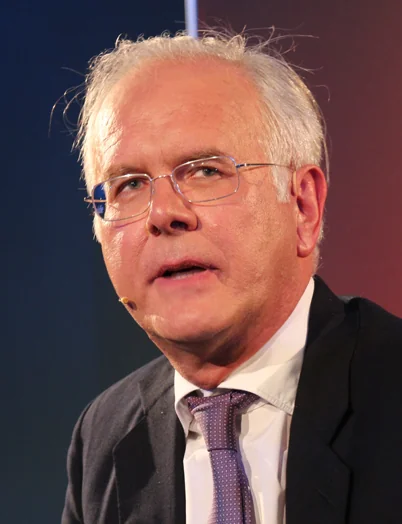
Image from Wikipedia
Image from Wikipedia
Harald Schmidt – The Sharp Voice of German Entertainment Culture
An Entertainer Between Stage, Television, and Satire
Harald Schmidt, born on August 18, 1957, in Neu-Ulm, is among the most influential figures in the history of German television and cabaret. He is known as a host, entertainer, actor, cabaret artist, and columnist whose career has been characterized for decades by pointed observation, elegant stage presence, and an unmistakable satirical approach. His name stands for a form of entertainment that has never viewed entertainment merely as distraction but always as a mirror of society. ([de.wikipedia.org](https://de.wikipedia.org/wiki/Harald_Schmidt))
Schmidt's path led him from the theater stage through cabaret to the forefront of German television. Particularly through formats like Schmidteinander and Die Harald Schmidt Show, he became a cult figure whose style, wit, and timing have had a lasting impact on the media landscape. At the same time, he evolved into a personality that could never be reduced to a single genre but always shifted between stage, hosting, columns, and performances. ([de.wikipedia.org](https://de.wikipedia.org/wiki/Harald_Schmidt))
The Early Years: Theater, Cabaret, and Craftsmanship
Before becoming a television star, Harald Schmidt gained his experience in places where timing, understanding of text, and presence are immediately tested: on stage. In 1978, he appeared as an extra at the Württemberg State Theater Stuttgart in Claus Peymann's production of Chekhov's Three Sisters. His first permanent engagement took him to the Augsburg City Theaters from 1981 to 1984, where he started with a small role and gradually built a foundation of theatrical practice and role work. ([de.wikipedia.org](https://de.wikipedia.org/wiki/Harald_Schmidt))
In 1984, Schmidt moved to the Düsseldorfer Kom(m)ödchen, where his cabaret career began to take shape under the guidance of Lore Lorentz. There he developed that blend of distance, irony, and controlled emphasis that would later become his trademark. As early as 1985, he toured with his first solo program Ich hab’ schon wieder überzogen; this was followed by Überstehen ist alles (1988) and Schmidtgift (1992), which further defined his signature in German cabaret. ([de.wikipedia.org](https://de.wikipedia.org/wiki/Harald_Schmidt))
The Breakthrough on Television: From Cult Format to Public Figure
Harald Schmidt's real wide-reaching impact on television began in 1988 with MAZ ab! on the sender Freies Berlin, which later aired on ARD. In 1990, Pssst … and Schmidteinander, which he co-hosted with Herbert Feuerstein, followed. These formats combined media self-reflection, ironic distance, and an unusually fast-paced, linguistically precise understanding of humor for German standards. The shows made it clear that Schmidt did not merely perform television but regarded it as a stage for his own tonality and rhythm. ([de.wikipedia.org](https://de.wikipedia.org/wiki/Harald_Schmidt))
The significant leap in popularity came in 1992 with Verstehen Sie Spaß?, a show specifically designed for Harald Schmidt that brought him closer to a wide audience of millions. In 1995, he transitioned to Sat.1 and launched Die Harald Schmidt Show, which ran until 2003 and achieved cult status as Germany's late-night brand. This was followed by a return to ARD, the duo Schmidt & Pocher, another Harald Schmidt, a return to Sat.1, and finally the Sky phase until 2014. These stages show a career drama similar to that of music careers: recurring refrains, new arrangements, and always a clear artistic identity. ([de.wikipedia.org](https://de.wikipedia.org/wiki/Harald_Schmidt))
Style and Impact: Satire with Attitude, Language with Pace
Harald Schmidt represents a rare combination of intellect, laconic humor, and choreographed lightness. His humor relies on condensation, allusion, and deliberate exaggeration; he acts less as a mere joke provider than as a commentator on a cultural moment. Deutschlandfunk Kultur described him in 2025 as a satirist who, with his humor and unique style, has shaped societal and political themes for years. ([deutschlandradio.de](https://www.deutschlandradio.de/harald-schmidt-bei-dlf-kultur-on-tour-100.html))
His authority lies precisely in this: Schmidt masters both the format and the performance, the punchline and the pause. His impact is derived from stage routine, linguistic control, and an attitude that never separates entertainment from observation. His early training in theater and cabaret is evident in every phase of his career, particularly in the precision of his moderation and the confidence in dealing with guests, the audience, and live situations. ([de.wikipedia.org](https://de.wikipedia.org/wiki/Harald_Schmidt))
Discography in a Broader Sense: Releases, Editions, and Media Traces
While Harald Schmidt does not have a classical music discography, his media publication landscape is extensive. His Wikipedia page lists numerous DVD and best-of editions, including Harald Schmidt – Respektlos und rezeptfrei, Die Harald Schmidt – The Best of Vol. 1 & 2 + Golden Goals, Harald Schmidt – Gala, and Harald Schmidt & Oliver Pocher – Das erste Jahr: Best of. These releases not only document the history of the shows but also the aesthetic development of an entertainer whose material has been collected, edited, and recontextualized over the years. ([de.wikipedia.org](https://de.wikipedia.org/wiki/Harald_Schmidt))
Additionally, Schmidt has published books, and his weekly column for the magazine Focus from 1994 to 2013, along with later video columns. This is also part of his artistic overall work: language is not only spoken but also written, sharpened, and translated into media formats. As a result, a body of work emerges that can be understood broadly as a discography – a catalog of performances, versions, and editorially shaped moments. ([de.wikipedia.org](https://de.wikipedia.org/wiki/Harald_Schmidt))
Awards and Recognition: A Standard of German Entertainment
Schmidt's influence is also reflected in a remarkably dense list of awards. He received the Salzburger Stier as early as 1986, followed by the Goldene Europa, Telestar, and Bambi in 1993, and later the Grimme Prize, Goldene Kamera, the Deutscher Fernsehpreis, and various other accolades. These awards mark not only popularity but also the repeated acknowledgment of a form of entertainment that has long been regarded as both demanding and mass-effective in Germany. ([de.wikipedia.org](https://de.wikipedia.org/wiki/Harald_Schmidt))
Particularly noteworthy is the breadth of these honors: they span from television and comedy awards to culturally and journalistically influenced prizes. In 2024, Schmidt received the Benjamin W. Heineman Prize in Stuttgart for his efforts to defend freedom rights and democratic values; he donated the prize money to several charitable organizations. This award shows that his public role extends beyond the realm of showbiz into societal debates. ([de.wikipedia.org](https://de.wikipedia.org/wiki/Harald_Schmidt))
Current Presence: Conversational Partner, Commentator, and Stage Guest
Even after the end of his own TV formats, Harald Schmidt remained a public presence. In 2025, he appeared at a Deutschlandfunk Kultur event in Freiburg, where he spoke in a live discussion about social and political issues. In May 2025, he was also seen at the Steudltenn Theater Festival, where a sold-out audience awaited him, and his appearance was covered by the press as a prominent stage moment. This shows that Schmidt is not a nostalgic figure but a vibrant part of the current cultural conversation. ([deutschlandradio.de](https://www.deutschlandradio.de/harald-schmidt-bei-dlf-kultur-on-tour-100.html))
His official website remains active and refers to travels, news, and personal notes. Although there is no traditional social media presence, the site confirms that Harald Schmidt continues to control his public presence himself and communicates sparingly rather than excessively. This restraint enhances the impression of a figure who does not chase every trend but curates her perception confidently. ([haraldschmidt.de](https://haraldschmidt.de/))
Cultural Influence: The Archetype of the German Late-Night Intellectual
Harald Schmidt has profoundly shaped German entertainment culture by merging an American-inspired late-night model with German linguistic satire, theater discipline, and intellectual irony. His shows became reference points for later generations of hosts, and his attitude toward his own role changed the perception of entertainment as a cultural form. In a media landscape that often fluctuates between pace and randomness, Schmidt long relied on control, attitude, and a deliberate play with expectation and subversion. ([de.wikipedia.org](https://de.wikipedia.org/wiki/Harald_Schmidt))
This is precisely what makes him intriguing: as an artist who was never just an entertainer but also an observer, commentator, and style icon. His career connects theater, cabaret, television, and journalism into a work that is unique in Germany. Those who experience Harald Schmidt live encounter a master of the moment who treats language as an instrument and understands the stage as a space for thought. ([de.wikipedia.org](https://de.wikipedia.org/wiki/Harald_Schmidt))
Conclusion: Harald Schmidt continues to fascinate with wit, discipline, and the rare ability to imbue entertainment with cultural weight. He remains a reference for intelligent satire, precise moderation, and sovereign stage presence. Those who see him live encounter not just a nostalgic figure but an entertainer whose presence still captures attention and fills spaces with intellectual tension even after decades. ([deutschlandradio.de](https://www.deutschlandradio.de/harald-schmidt-bei-dlf-kultur-on-tour-100.html))
Official Channels of Harald Schmidt:
- Instagram: no official profile found
- Facebook: no official profile found
- YouTube: no official profile found
- Spotify: no official profile found
- TikTok: no official profile found
Sources:
Upcoming Events
No Nonsense: Harald Schmidt
Bonn gets satire with style: Harald Schmidt makes the opera stage resonate. On 30.12.2025 at 8 PM, fine comedy with bite awaits. #HaraldSchmidt #Bonn
GUEST PERFORMANCE Harald Schmidt & Bernadette Schoog: Talk Evening
Who comes to your mind first when you hear the name "Harald Schmidt"? The long-time late-night talker, the cruise director …
Waterburg Piano Summer
Two days of piano magic in Wasserburg: Lei Meng, Harald Schmidt, and young talents meet in the Festsaal Gabersee for a special concert weekend. Free admission, strong moments, great proximity. #PianoSummer
Harald Schmidt in conversation with Korbinian Frenzel
Harald Schmidt live in Schwerin: fine punchlines, sharp view, and an evening full of clever comedy in the theater tent. #Schwerin #Cabaret