
Ignaz Reimann
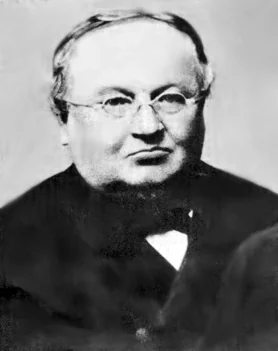
Image from Wikipedia
Image from Wikipedia
Ignaz Reimann – The Silesian Master of Church Music and the Lasting Power of the Christkindlmesse
A composer, teacher, and church musician who had an impact far beyond his homeland
Ignaz Reimann, born on December 27, 1820, in Albendorf and died on June 17, 1885, in Rengersdorf, is one of those figures in music history whose name is mostly associated with a single work: the Christkindlmesse. At the same time, he was a teacher, church musician, and composer, making him an artist who shaped a remarkably rich musical culture from the everyday context of church and school life. His work embodies the connection of lived piety, melodic appeal, and craftsmanship discipline. (de.wikipedia.org)
Reimann hailed from the Silesian region, which shaped his life and work decisively. He received early musical instruction from his father, who worked as an innkeeper and musician in Albendorf, and was trained in organ practice by the local teacher and cantor. His talent emerged so early that he was already able to fill in for his teacher at the organ by the age of ten. This biographical constellation explains much of his later musical language: practical, rooted in liturgy, and designed for direct impact. (de.wikipedia.org)
The Early Years: Education, Church Practice, and the Foundation of His Style
Between 1838 and 1841, Reimann attended the Catholic teacher training college in Breslau. There, he encountered the Breslau School, which traces its compositional activity back to Joseph Ignaz Schnabel, and was introduced to an environment where liturgical music was not merely a supportive art but a form of spiritual expression. Due to his outstanding musical accomplishments, Joseph Schnabel appointed him as the music director of the seminary. This early recognition already points to the authority Reimann gained as a musician. (de.wikipedia.org)
The sources later describe Reimann as a teacher, cantor, composer, and church musician; his professional profile combined pedagogy with musical practice. This dual role profoundly shaped his career. He composed not from an ivory tower, but from an environment where musical quality, comprehensibility, and liturgical function had to converge. This represents a key to his lasting presence in the repertoire of church choirs. (katalog.ub.uni-heidelberg.de)
Career and Works: How the Christkindlmesse Became a Musical Trademark
Reimann's most famous work is the Pastoral Messe in C Major, op. 110, which became renowned as the Christkindlmesse. It is a Latin setting of the mass for soloists, choir, orchestra, and organ, and is particularly performed during Christmas time due to its use in the Christmas mass for generations. The tradition highlights that it is among the most frequently performed pastoral masses in the German-speaking world and has secured a lasting place in the consciousness of church music with its catchy melodies. (de.wikipedia.org)
The fact that Reimann was more than just a one-work composer is demonstrated by the extent of his oeuvre: Of over 800 compositions, about 160 were printed during his lifetime. This points to an enormous productivity that was deeply rooted in regional church music of the 19th century. His works circulated not only in Silesia but also made him known far beyond his homeland. The sources particularly emphasize the popularity and catchiness of his music, qualities that continue to appeal to many choirs and listeners today. (de.wikipedia.org)
Later Years, Family, and Lasting Impact
Reimann was married to Caroline; the couple had two sons and a daughter. His eldest son, Heinrich Reimann, became known as a musicologist, royal librarian, and organist, while the second son, Franz, worked as a teacher and choir director. This also shows how strongly musical and educational continuities were anchored in Reimann's family life. His retirement from professional life was applied for in 1885 and granted shortly thereafter; just days later, he suffered another stroke and passed away after two weeks. (de.wikipedia.org)
His legacy was secured not only through scores but also through research and preservation of his works. A fundamental biographical study on his life and works was authored by Siegmund Pchalek and released in 2008 as an extensive monograph with a catalog of works. The fact that Reimann's name remains present today through scholarly articles, editions, and festival initiatives underscores his status as a historically significant representative of Silesian church music. (katalog.ub.uni-heidelberg.de)
Discography, Reception, and Presence in Church Music
For a 19th-century composer, "discography" primarily refers to the legacy through recordings, score editions, and performances. For Reimann, the reception clearly focuses on the Christkindlmesse, which remains tangible in editions and performance materials and regularly appears in church concert life. Additionally, repertoire entries document other sacred works such as Te Deum, Regina caeli, pastoral masses, and shorter mass settings that are listed in publishing and sheet music trade. (demond.de)
The critical classification is notably clear: Reimann's music is not regarded as avant-garde but as immediately accessible, melodic, and liturgically functional. These qualities explain the high frequency of performances of his Christmas mass. From a music history perspective, he represents that strong Catholic church music tradition of the 19th century, in which utility, festivity, and compositional solidity do not contradict but rather reinforce each other. (bodensee-musikversand.de)
Musical Style: Between Popularity, Liturgy, and Clear Writing
Reimann's style combines clear melodic lines with a composition technique oriented towards worship. Sources explicitly cite popularity and catchiness as essential characteristics of his work. Musically, this means understandable thematic development, solemn architecture of composition, and a language that addresses singers, the congregation, as well as the concert audience. His works achieve impact not through a cult of virtuosity but through tonal warmth and liturgical plausibility. (bodensee-musikversand.de)
Historical placement is also important. Reimann was part of the Breslau School and thus belongs to a tradition that significantly shaped Catholic church music in Eastern Germany. The biography of the composer reveals not only a regional career but also a piece of music history, in which education, church offices, and compositional production were closely intertwined. Listening to his music allows one to encounter a romantic style that balances function and expression. (de.wikipedia.org)
Cultural Influence and Contemporary Significance
Reimann's significance also lies in the fact that his music contributes to the cultural memory of Silesia and the German-speaking church music repertoire. The publication on his life and work explicitly emphasizes that the book contributes to the study of Silesian and general German musical culture of the 19th century. Additionally, there are festival initiatives in Albendorf and Rengersdorf that bind Reimann's heritage to its historical venues and transform his music into a living space of remembrance. (bodensee-musikversand.de)
For today's choirs and church music enthusiasts, Reimann remains fascinating because his works offer immediate access to the late romantic liturgical sound world. The Christkindlmesse is not a museum artifact but a piece of living musical practice that continues to resonate through its melodic brilliance to this day. Therein lies its lasting appeal: Reimann composes music that sounds festive, carries emotion, and fills the sacred space with a simple yet enduring expression. (de.wikipedia.org)
Conclusion: A Quiet Classic with Great Resonance
Ignaz Reimann captivates as a composer because he sought not a loud modernity but a form of truth that endures in church music. His biography connects pedagogical authority, liturgical practice, and compositional productivity into a cohesive artistic image. Those who listen to the Christkindlmesse experience a master of melodic application, whose work reveals a special emotional depth during the Christmas season. Reimann remains compelling because he shows how strongly musical simplicity, craftsmanship clarity, and religious atmosphere can interact. A live experience of his music is worthwhile where choral sound, organ, and sacred acoustics bring this tradition to life. (bodensee-musikversand.de)
Official Channels of Ignaz Reimann:
- Instagram: no official profile found
- Facebook: no official profile found
- YouTube: no official profile found
- Spotify: no official profile found
- TikTok: no official profile found