
Jan Lisiecki
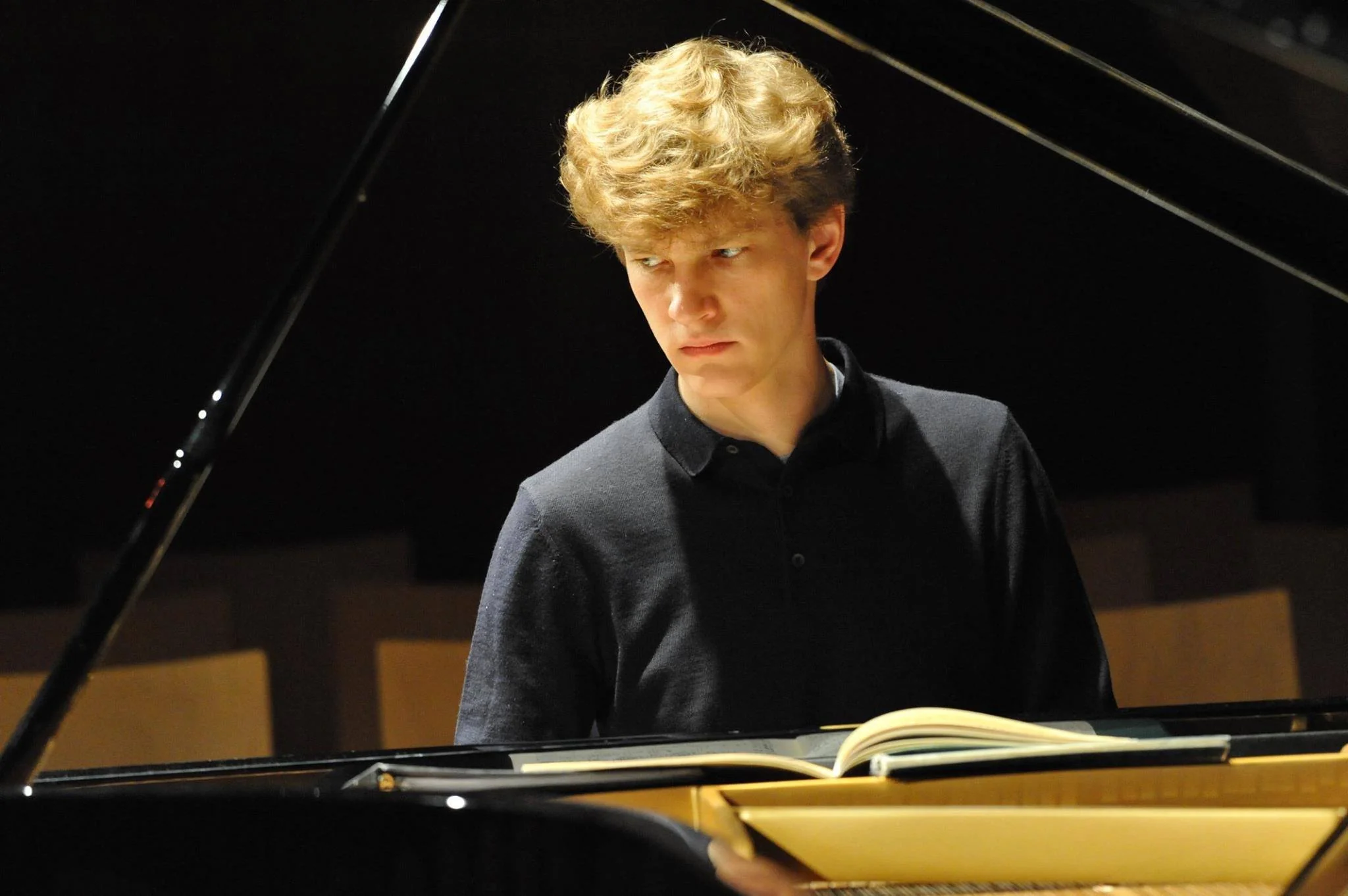
Image from Wikipedia
Image from Wikipedia
Jan Lisiecki: The Canadian Pianist with a Polish Soul and Extraordinary Maturity
Jan Lisiecki – An Exceptional Talent Bridging Chopin Tradition, Sonic Elegance, and a Modern Concert Career
Jan Lisiecki belongs to that rare generation of classical pianists whose musical career has attracted international attention from a young age, yet cannot be reduced to early virtuosity alone. Born in Calgary in 1995 to Polish roots, he combines technical clarity, stylistic finesse, and remarkable musical maturity to create a profile that is instantly recognizable in today’s classical music scene. Early on, his path led him to the grand festival stages of Europe and North America, where he established himself as a precise, lyrical, and intellectually reflective interpreter.
What makes Lisiecki particularly fascinating is the combination of early talent, rigorous training, and a discography that focuses not on effect but on musical substance. His repertoire revolves primarily around the great classics of the piano canon: Chopin, Mozart, Schumann, Mendelssohn, and Beethoven. This paints the picture of an artist who does not merely preserve the romantic and classical heritage but brings it to life with a clear focus on tonal culture, formal awareness, and emotional depth.
Early Years and Artistic Influence
Jan Miłosz Lisiecki began learning the piano at the age of five after a school advisor recommended his parents encourage music as a means to broaden his horizons. This early decision laid the foundation for an exceptional career, leading to his debut on the Canadian concert stage at just nine years old. That he does not come from a musical family makes his development all the more remarkable: His rise stems from talent, discipline, and a surprisingly rapid maturation of musical judgment.
Polish family roots and early exposure to the language have profoundly shaped Lisiecki’s artistic identity. His connection to Poland has remained vibrant over the years, not least through performances at significant Chopin festivals in Warsaw. It was there that it became evident that Lisiecki is not just a technically brilliant pianist, but a musician rooted in the tradition of great Chopin interpreters, rejuvenating this tradition with youthful freshness.
The Breakthrough: Chopin and International Attention
His international breakthrough came with Chopin. At the age of thirteen, Lisiecki was invited to the festival “Chopin and his Europe” in Warsaw in 2008, where his interpretation of Chopin’s Piano Concerto No. 1 garnered significant attention. The recordings that followed were released in 2010 and introduced him to a broader classical audience. By this time, he was no longer just a prodigy but a young artist with a distinct musical language.
His early expertise in Chopin became a recurring theme in his career. The first recordings showcased that blend of sparkling touch, controlled emphasis, and stylistic elegance that would later become his signature. Especially within the Chopin repertoire, Lisiecki’s ability to transform virtuosity into expression unveiled itself, sharpening rather than stretching the romantic form.
Deutsche Grammophon, Global Career, and Major Orchestras
At the age of fifteen, Lisiecki signed an exclusive contract with Deutsche Grammophon, a step that significantly accelerated his international music career. Since then, a series of recordings have marked him as a serious, consistently discographically minded artist. His collaborations with renowned conductors and orchestras such as Antonio Pappano, Yannick Nézet-Séguin, Daniel Harding, Manfred Honeck, as well as ensembles like the New York Philharmonic, the Chicago Symphony Orchestra, the Staatskapelle Dresden, and the London Symphony Orchestra underscore his authority in the concert scene.
His presence on major stages is particularly impressive. Lisiecki has performed at Carnegie Hall, the Elbphilharmonie Hamburg, the Salzburg Festival, and with the Academy of St Martin in the Fields, among others. His stage presence is never aimed at showiness but conveys musical concentration, dialogic energy, and formal discipline. The fact that he gives well over a hundred concerts annually explains why his interpretations exude such high inner tension and confidence.
The Discography: From Mozart to Beethoven
Jan Lisiecki's discography traces an artistic development that unfolds in deliberate steps. His significant releases include Mozart: Piano Concertos Nos. 20 & 21, Chopin: Études, Schumann, Mendelssohn, Chopin: Works for Piano & Orchestra, Beethoven: Complete Piano Concertos, Beethoven: Songs, Chopin: Nocturnes, Night Music, and most recently, Preludes. This selection not only showcases stylistic diversity but also a remarkable fidelity to the poetic core of the piano repertoire.
Notably, the Beethoven recordings mark an important chapter. The live recording of all five piano concertos from the Konzerthaus Berlin, where Lisiecki conducted the Academy of St Martin in the Fields from the piano, united soloist and ensemble into a chamber music-like coherence. This was accompanied by the Beethoven song cycle with Matthias Goerne, which was awarded the Diapason d’Or. These projects demonstrate that Lisiecki excels not only as a soloist but also as a musical partner with structural thinking.
Style, Touch, and Musical Development
Jan Lisiecki's style is characterized by transparency, sonic purity, and a remarkable control of rubato. His technique never feels mechanical but serves a carefully sculpted musical line. Many reviews emphasize his mature interpretation, which transcends his age. Especially in the Chopin recordings, he reveals that rare balance of elegance, intimacy, and tension that distinguishes great pianists from mere virtuosos.
His playing recalls the tradition of great Polish pianism without descending into mere imitation. The sonic focus is on a clear, singing tone, flawless articulation, and a formal design that preserves inner architecture even in lyrical passages. In works by Mozart and Mendelssohn, his ability to penetrate classical structures with ease and intellectual vigor is evident, without making them feel academic.
Current Projects: Preludes, Mozart, and New Concert Programs
In the years 2024 to 2026, Lisiecki will remain highly active artistically. With the album Preludes, he released his tenth recording for Deutsche Grammophon in 2025. The recording places Chopin’s 24 Préludes Op. 28 in a broader historical context, combining them with selected preludes by Bach, Messiaen, Rachmaninoff, and Górecki. This creates an auditory and conceptual journey through the evolution of a musical form over several centuries.
A new Mozart recording featuring Piano Concertos Nos. 9 and 22 is also scheduled for release in April 2026, recorded with Manfred Honeck and the Bamberg Symphony. Concurrently, Lisiecki is presenting new concert programs, including World (of) Dance, showcasing dance forms from various eras and traditions. These projects illustrate that he perceives his artistic development not as a repetition but as an ongoing exploration of the repertoire.
Awards, Critique, and Cultural Influence
Lisiecki's career has been recognized early on with important awards. He received the Gramophone Young Artist Award and the Leonard Bernstein Award, was honored with the JUNO Award and the ECHO Klassik, and received the Diapason d’Or and the Edison Klassiek Award for Beethoven: Songs. Such accolades document not only success but also the resonance of an interpretation that finds high recognition both in expert circles and among the public.
The press has repeatedly responded with great acclaim. Deutsche Grammophon cites the New York Times, which describes his Mozart playing as “wonderful, genuine, unforced, and refreshing.” Additional reviews speak of a sound language that is lyrical, intelligent, and remarkably mature. Culturally, Lisiecki contributes to making the classical piano repertoire accessible to younger audiences without diluting its artistic ambition.
Conclusion: A Pianist of Rare Clarity and Depth
Jan Lisiecki is exciting because he combines virtuosity, maturity, and stylistic self-discipline in a manner that is not taken for granted in the classical realm. His career showcases an artist who was discovered early, yet has not exhausted himself in the status of a prodigy but has consistently grown into an independent voice in international concert life. Those who experience Lisiecki live encounter not just a brilliant pianist but a storyteller at the piano, shaping great music with a clear mind and open heart.
Official Channels of Jan Lisiecki:
- Instagram: No official profile found
- Facebook: No official profile found
- YouTube: No official profile found
- Spotify: No official profile found
- TikTok: No official profile found
Sources:
- Jan Lisiecki - About
- Jan Lisiecki - Recordings
- Jan Lisiecki - Contact
- Deutsche Grammophon - Biography Jan Lisiecki
- Deutsche Grammophon - Jan Lisiecki Plays Mozart's Piano Concertos Nos. 9 and 22
- KD Schmid - “Preludes” – Jan Lisiecki’s New Album Now Available
- Culture.pl - Jan Lisiecki Biography
- Wikipedia: Jan Lisiecki
Upcoming Events
Jan Lisiecki: World of Dance
Experience Jan Lisiecki on May 17, 2026, at the Staatstheater Braunschweig and enjoy dance-inspired works.
Royal Philharmonic Orchestra & Jan Lisiecki, Klavier
Große Klassik, starke Spannung: Jan Lisiecki und das Royal Philharmonic Orchestra in der Tonhalle Düsseldorf. 31.01.2027, ab 63,10 Euro. Jetzt erleben! #Klassik