
Marcel Dupré
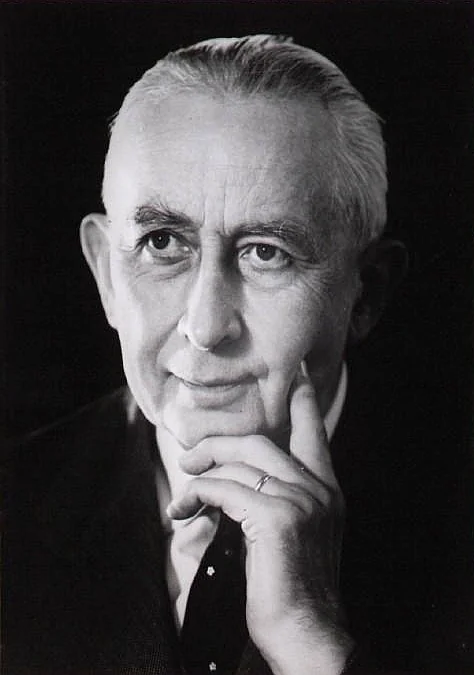
Image from Wikipedia
Image from Wikipedia
Marcel Dupré – the Titan of French Organ Art between Virtuosity, Improvisation, and Intellectual Rigor
A Portrait of a Musician who Redefined Organ Playing in the 20th Century
Marcel Jean-Jules Dupré was born on May 3, 1886, in Rouen and died on May 30, 1971, in Meudon. He is considered one of the outstanding French organists, composers, and educators of his era, whose name remains inseparably linked with technical brilliance, improvisational imagination, and an extraordinarily influential musical career. Early on, he was shaped by a musical family background, the organ tradition of Northern France, and a career that took him from Rouen to Paris and onto international concert stages. ([britannica.com](https://www.britannica.com/biography/Marcel-Dupre))
Childhood, Education, and Early Calling as an Organist
Dupré's artistic development began under special circumstances: His father was an organist, the family deeply rooted in church music, and he was recognized for his exceptional talent as a child. Sources describe the family home as a musical center where he came into contact with the great works of organ literature at an early age. By the age of eleven, he had already taken an organist position in Rouen, a testament to the remarkable precocity of his talent. ([pipedreams.publicradio.org](https://pipedreams.publicradio.org/tour/2017france/france2017booklet.pdf))
His education at the Paris Conservatoire shaped him into one of the most technically proficient musicians of his time. There, he studied under renowned teachers such as Guilmant, Vierne, and Widor, winning first prizes in piano, organ, and fugue. In 1914, he won the Prix de Rome with the cantata Psyché, a milestone that further confirmed his compositional competence and solidified his position in the French music scene. ([wisemusicclassical.com](https://www.wisemusicclassical.com/composer/4421/Marcel-Dupr%C3%A9/))
The Breakthrough: Memorizing Bach, Improvisation as an Art Form
The real international breakthrough came in 1920 when Dupré memorized and performed the entire organ cycle of Johann Sebastian Bach in Paris. This feat earned him worldwide acclaim and made him a mythic figure in concert life. Shortly thereafter, he embarked on tours, particularly in England and the USA, where his improvised organ symphonies were hailed as a musical sensation in the press. ([britannica.com](https://www.britannica.com/biography/Marcel-Dupre))
Dupré's improvisations were at the core of his artistic authority. Contemporary reports and later evaluations highlight that he could formulate entire fugues and symphonies from given themes, skillfully blending contrapuntal mastery with dramatic architecture. Works such as the Symphonie-Passion and Le Chemin de la croix initially emerged as improvisations and were only later transcribed. In this lies the dual nature of his genius: spontaneous on stage, strictly constructed on paper. ([britannica.com](https://www.britannica.com/biography/Marcel-Dupre))
Saint-Sulpice, Paris, and the Great Organ Tradition
In 1934, Dupré succeeded Widor as titular organist at Saint-Sulpice in Paris, a position he held until his death. This venue became the spiritual center of his work, where liturgical improvisation, concert practice, and pedagogical authority converged. For decades, he attracted an audience eager not only to listen to music but to witness a vibrant act of artistic invention. ([wisemusicclassical.com](https://www.wisemusicclassical.com/composer/4421/Marcel-Dupr%C3%A9/))
His concert activity was immense: More than two thousand recitals worldwide make it clear that Dupré was not only a church musician but an international virtuoso. Especially in the USA and the UK, he was celebrated as a representative of French organ art, and his performances were seen as a touchstone for the expressive power of modern concert organs. The connection of instrument, space, and improvisation gave his performances an almost sacred tension. ([pipedreams.publicradio.org](https://pipedreams.publicradio.org/tour/2017france/france2017booklet.pdf))
The Teacher: Influence on Generations of Organists
As an educator, Dupré profoundly shaped the French and international organ school. From 1926, he taught at the Conservatoire de Paris and trained a generation of musicians, including Olivier Messiaen, Jean Langlais, Jehan Alain, Jeanne Demessieux, Pierre Cochereau, Jean Guillou, Rolande Falcinelli, and Marie-Claire Alain. These names illustrate how far his influence extended beyond his own career: Dupré established a school of thinking, listening, and creating. ([wisemusicclassical.com](https://www.wisemusicclassical.com/composer/4421/Marcel-Dupr%C3%A9/))
His educational works also made him an authority in the field. He wrote important treatises on organ technique, improvisation, harmony, counterpoint, fugue, and Gregorian chant, thereby theoretically grounding the practice of organ playing. In doing so, he intertwined two levels that defined his career: the immediate stage presence of the virtuoso and the analytical rigor of the music writer. ([britannica.com](https://www.britannica.com/biography/Marcel-Dupre))
Discography, Works, and Critical Reception
Dupré's oeuvre includes major concert works, liturgical pieces, technical studies, and numerous organ settings, including a series of chorales as well as compositions for organ and orchestra. His catalog is maintained by Warner Classics and Wise Music Classical, and current editions show that his music remains vibrant in the repertoire of the organ world. Publications such as Symphonie-Passion, arrangements of Widor, Dupré, and other French masters, as well as new recordings, attest to the enduring relevance of his catalog. ([warnerclassics.com](https://www.warnerclassics.com/de/artist/marcel-dupre))
The critical reception often describes Dupré as an exceptional improviser and one of the greatest organists of the 20th century. Britannica calls him the leading French organ virtuoso of his time; other specialized sources emphasize the combination of technical superiority, contrapuntal discipline, and spiritual intensity. At the same time, music historical classifications point out that his spectacular virtuosity sometimes obscured the poetic and spiritual side of his work. ([britannica.com](https://www.britannica.com/biography/Marcel-Dupre))
Style, Sound Language, and Cultural Influence
Dupré's style is rooted in the tradition of French Romanticism but carries it into a disciplined, often almost architectural modernity. His compositions combine broad arcs of tension, strict polyphony, brilliant registration, and clear dramaturgy. Particularly in the improvised and later notated works, a thinking in large musical forms is evident, understanding the organ not merely as a liturgical instrument but as a symphonic medium. ([pipedreams.publicradio.org](https://pipedreams.publicradio.org/tour/2017france/france2017booklet.pdf))
His cultural influence extends far beyond France. Through international tours, memorizing the Bach cycles, and legendary improvisations, Dupré became a symbol of organ art that combines technical excellence with spiritual depth. Decades after his death, he remains a reference point for organists, measuring interpretive artistry, improvisation, and pedagogical legacy. ([britannica.com](https://www.britannica.com/biography/Marcel-Dupre?utm_source=openai))
Current Projects and Publications
As a historical artist, Marcel Dupré does not have any current projects or new releases in the present sense. However, current search results refer to ongoing performances, re-releases, and programming of his works by labels, concert series, and organ institutions. This shows that his music continues to thrive not only in archives but in active concert and recording activities. ([warnerclassics.com](https://www.warnerclassics.com/de/artist/marcel-dupre))
Conclusion: Why Marcel Dupré Continues to Fascinate Today
Marcel Dupré fascinates because he united three rare qualities in one person: the elegance of the interpreter, the boldness of the improviser, and the discipline of the educator. His career tells the story of a musician who transformed the organ into an arena of the highest art while simultaneously shaping generations of students. Those who hear Dupré's work encounter not only historical grandeur but music that continues to have an immediate impact today. ([britannica.com](https://www.britannica.com/biography/Marcel-Dupre))
For this reason, every encounter with his works live in the concert hall or in the church is worthwhile: there, the full force of his sound language, his registration artistry, and his musical imagination unfolds. Marcel Dupré remains a name that not only describes the history of organ music but has decisively contributed to it. ([pipedreams.publicradio.org](https://pipedreams.publicradio.org/tour/2017france/france2017booklet.pdf))
Official Channels of Marcel Dupré:
- Instagram: no official profile found
- Facebook: no official profile found
- YouTube: no official profile found
- Spotify: no official profile found
- TikTok: no official profile found