
Maria Imma Mack
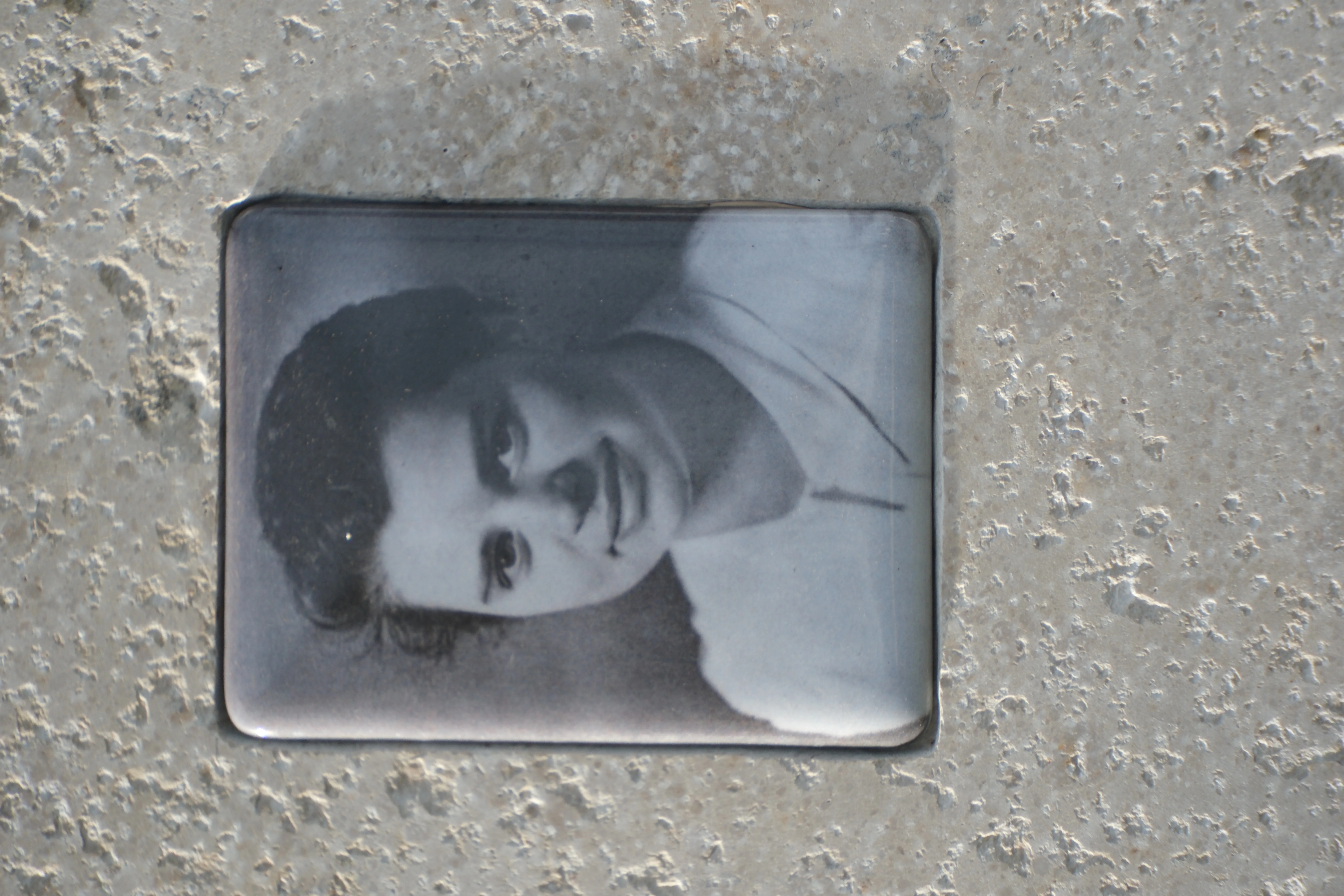
Image from Wikipedia
Image from Wikipedia
Maria Imma Mack – the quiet helper from Dachau and a life dedicated to courage, conscience, and humanity
A nun who brought light in dark times
Maria Imma Mack, born Josefa Mack on February 10, 1924, in Möckenlohe near Eichstätt and died on June 21, 2006, in Munich, is one of those women whose biographical greatness arises not from public self-presentation but from quiet, determined action. As a nun of the Congregation of the Poor School Sisters of Our Lady in Munich, she became known under the codename "Mädi" because she secretly supplied prisoners in the Dachau concentration camp with food, letters, and liturgical items. Her life symbolizes civil courage, religious conviction, and actions taken under life-threatening conditions.
This artist and musician page is intentionally not to be read strictly in the musical sense, as Maria Imma Mack was not a singer, composer, or instrumentalist. Nevertheless, her life story deserves a comprehensive, authoritative representation because her role in German memory culture, Catholic contemporary history, and the confrontation with National Socialism is extraordinary. Her name remains associated with Dachau, with human aid, and with a special form of responsibility.
Biographical beginnings in Upper Bavaria
Josefa Mack grew up in an environment that, as her community later emphasized, was early marked by a rejecting attitude toward the Nazi Party. At just 16, she entered the candidacy of the Poor School Sisters in Munich and began her training as a handicraft teacher in 1940. These early years already show a clear commitment to service, education, and church life, long before her name became linked with Dachau and resistance.
The training facility in Munich's Au was forcibly closed in January 1942, after which Josefa worked as an assistant in the children's home of the school sisters in Freising-St. Klara. This marked the beginning of the phase in her life that would later be considered particularly significant. From a young woman on the path to becoming a nun, she became a clandestine helper of concentration camp prisoners, finding the courage to provide concrete assistance.
The road to Dachau: helping at the risk of her life
From May 1944, Josefa Mack regularly traveled to the Dachau concentration camp, initially by bicycle, in winter even on foot and with a sled. Her trips were part of a dangerous but persistent aid service: she brought food, medicine, communion hosts, altar wine, and other items that were of great significance for the prisoners and the pastoral care in the camp. According to sources, she made these trips about 60 times until the end of the war.
It is particularly striking that she never elevated the humanitarian dimension of her actions with excessive pathos. The nun later simply spoke of the plight of the prisoners and how much she hoped to remain undiscovered. This sobriety adds additional credibility to her biography: here speaks not a legendary figure, but a woman who understood her actions as a duty and not as a stage.
“Mädi” and the connection to Karl Leisner
Under the codename "Mädi," Josefa Mack became an important liaison between the convent and the prisoners of the camp. Her deliveries contributed to the fact that the seriously ill priest candidate Karl Leisner was able to receive priestly ordination secretly in the Dachau concentration camp. Among the items transmitted were, according to sources, also liturgical objects, ordination texts, and the necessary permits required for this extraordinary event.
This story is remarkable because it documents a rare moment of dignity and spiritual life amid terror. Maria Imma Mack acted not loudly, not publicly, and not out of calculation. It is precisely from this that the moral authority of her life emerges: she helped where help seemed almost impossible, and she did so with a consistency that earned her the later honorary title "Angel of Dachau."
Religious life after 1945 and the return to everyday life
After the war, Josefa Mack entered the novitiate of the Poor School Sisters of Our Lady in 1945 and took the religious name Maria Imma. She made her religious vows in 1946. From then on, she lived and worked as Sister Maria Imma Mack, initially in Garmisch and later again in Munich's Au, where she worked as a handicraft teacher. Her life's path shows a remarkable continuity between her commitment during the war and her quiet work in peace.
That she remained silent for a long time about her trips to Dachau fits her reserved nature. It was not until 1989 that she wrote down her memories in the book “Warum ich Azaleen liebe” (Why I Love Azaleas). This late testimony makes her not only a religious figure but also a witness to history, whose experiences are not only historically valuable but also emotionally and ethically insightful. Her own language remains unpretentious and credible throughout.
Acknowledgment, awards, and public remembrance
Maria Imma Mack received several awards for her courage and her commitment to peace and reconciliation. Among these are the Bavarian Order of Merit, the Federal Cross of Merit 1st Class, the Cross of Honour Pro Ecclesia et Pontifice, and her induction into the French Legion of Honour as a Dame. In 2001, she was also awarded the City of Munich’s recognition “Munich Shines.”
These honors show that her actions were recognized not only by the church but also by society. Especially in Munich, the memory of her is still visible today: the Imma-Mack-Weg in Haidhausen has borne her name since 2009. Thus, a secretly acting helper has become a publicly honored figure, whose life's achievement is firmly inscribed in the city's history.
Historical significance and cultural influence
Maria Imma Mack exemplifies those women whose resistance consisted not in grand gestures but in practical solidarity. Her story connects Catholic piety, resistance against injustice, and concrete help for the persecuted. Especially in the context of Dachau, her actions gain special clarity, as religious practice, the daily experience of imprisonment, and human survival were closely intertwined.
The later culture of remembrance also benefits from her biography. Websites of the Poor School Sisters, the City of Munich, and other memorial and documentation sites keep her story alive. Thus, Maria Imma Mack remains not just a historical marginal figure, but a firm part of the discourse on civil courage, Christian responsibility, and female action in the 20th century.
A quiet life that continues to resonate today
Whoever considers Maria Imma Mack today sees not a loud icon but a woman who acted at the right moment and never stopped being humble. Her biography unites origin, faith, danger, and loyalty to those in need of help. It is precisely this combination of personal humility and historical significance that makes her name so striking.
She remains fascinating because her life shows how far courage can reach in everyday life. Maria Imma Mack reminds us that conscience often becomes visible where no applause is given. Those who engage with her story encounter an extraordinary nun whose quiet determination deserves respect even today.
Conclusion: Why Maria Imma Mack remains important
Maria Imma Mack was not an artist in the musical sense, but she created something just as valuable: a legacy of humanity, faith, and courage. Her help for the prisoners of Dachau, her role in the ordination of Karl Leisner, and her later honors make her an outstanding figure in German contemporary history. Those who come to know her life understand how great the impact of a single, determined action can be. A visit to the places of her memory and an engagement with her story are worth it even today.
Official channels of Maria Imma Mack:
- Instagram: no official profile found
- Facebook: no official profile found
- YouTube: no official profile found
- Spotify: no official profile found
- TikTok: no official profile found
Sources:
- Maria Imma Mack – Wikipedia
- Poor School Sisters – Sr. Imma Mack (Mädi)
- Poor School Sisters – Josefa Mack, Mädi, Angel of Dachau, Sister Maria Imma Mack
- City of Munich – Imma-Mack-Weg
- DOMRADIO.DE – 100 years ago, the nun Imma Mack was born
- Dachau Concentration Camp Memorial – Short Biography of Imma Mack
- Wikipedia: Image and text source