
Maria Imma Mack
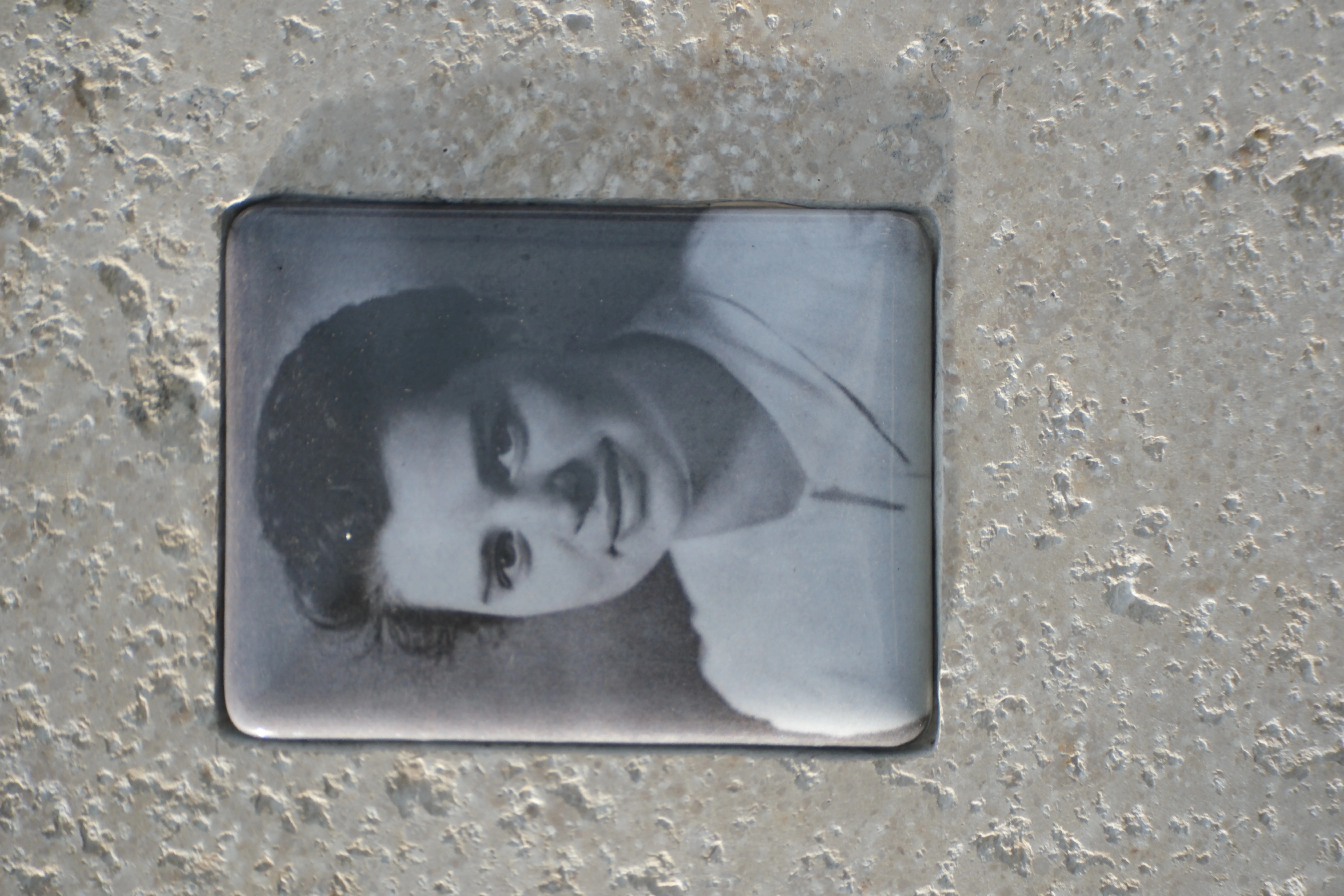
Image from Wikipedia
Image from Wikipedia
Maria Imma Mack – Courage, Conscience, and Lived Charity in the Shadow of Dachau
A woman whose life path became a silent yet unmistakable legacy
Maria Imma Mack, born on February 10, 1924, as Josefa Mack in Möckenlohe near Eichstätt and died on June 21, 2006, in Munich, is one of those biographies that define themselves not by fame but by moral greatness. As a sister of the Congregation of the Poor School Sisters of Our Lady in Munich, she became a secret helper of the inmates of the Dachau concentration camp under the codename "Mädi." Her life exemplifies civil courage, Christian responsibility, and the courage to act humanely in a deadly exceptional situation. ([deutsche-digitale-bibliothek.de](https://www.deutsche-digitale-bibliothek.de/person/gnd/113520522?utm_source=openai))
Background, Calling, and Early Influences
Josefa Mack grew up in a rural environment before becoming a candidate for the Poor School Sisters in 1940. Early on, her life path was intertwined with monastic discipline and social care, as she worked as an assistant in the order's children's home in Freising starting in 1942. These years shaped a young woman who did not distance herself from suffering and need, but rather accepted responsibility and grew into the everyday practice of care. ([katholisch.de](https://katholisch.de/artikel/50987-mit-rad-und-schlitten-so-half-eine-ordensschwester-kz-haeftlingen?utm_source=openai))
The stages of her education and religious life are more than mere dates: they illustrate the transition from a religious decision to concrete action. When she was first tasked in 1944 with purchasing flowers from the Dachau camp's greenhouse, she recognized the reality behind the facade of harmless shopping. Contact with this place transformed into a stance, and from that stance emerged a silent form of resistance. ([katholisch.de](https://katholisch.de/artikel/50987-mit-rad-und-schlitten-so-half-eine-ordensschwester-kz-haeftlingen?utm_source=openai))
Dachau: Secret Resistance through Food, Letters, and Liturgical Objects
Between May 1944 and April 1945, Maria Imma Mack regularly traveled to the Dachau concentration camp, cycling in the summer and using a sled in the winter. Under the pretense of flower shopping, she smuggled food, maintained contact between inmates and relatives through letters, and provided prisoners with liturgical items. In doing so, she consciously crossed the line between official religious work and dangerous assistance—risking her life. ([stadt.muenchen.de](https://stadt.muenchen.de/infos/imma-mack-weg.html?utm_source=openai))
The act of her help was by no means symbolic, but practical and risky. The city of Munich explicitly emphasizes that she knew that such assistance was punishable by death. It is precisely this clarity that makes her actions so impressive: she did not act under the cloak of an idealized memory but in a present where any compassion could have consequences. ([stadt.muenchen.de](https://stadt.muenchen.de/infos/imma-mack-weg.html?utm_source=openai))
“Mädi” and the Secret Solidarity with the Inmates
Under the codename “Mädi,” Maria Imma Mack became a trusted contact in the shadow of the camp. The items she transported ranged from food to religious materials, which held special significance in the prisoner community of Dachau. In the memory of these journeys, her work crystallized into a form of lived solidarity that was expressed not in grand gestures but in repetition, reliability, and personal dedication. ([de.wikipedia.org](https://de.wikipedia.org/wiki/Maria_Imma_Mack?utm_source=openai))
Her role in the context of the secret ordination of Karl Leisner, a Dachau inmate from the Diocese of Münster, further illustrates how deeply she was involved in this covert assistance. The documentation explicitly names her engagement in this context as pivotal. This not only reveals her as a silent helper but also as part of a network of hope that even created spaces for action within the camp. ([orden.de](https://www.orden.de/aktuelles/meldung/schwester-imma-mack-gestorben?utm_source=openai))
Late Recognition, Memory Culture, and Public Appreciation
After the war, Maria Imma Mack remained a woman of the background, but the memory of her efforts grew over the decades. She was honored by Germany and France and received the papal honor Pro Ecclesia et Pontifice. Such awards mark the recognition of a life's work that is not exhausted in charitable routine but is rooted in moral determination under extreme conditions. ([orden.de](https://www.orden.de/aktuelles/meldung/schwester-imma-mack-gestorben?utm_source=openai))
The names in the public sphere also reflect this recognition. In Munich, Imma-Mack-Weg was named after her in 2009, in Freising there is Imma-Mack-Platz, in Ingolstadt a student residence bears her name, and in Möckenlohe, a commemorative plaque was dedicated in 2024 to mark her 100th birthday. Such signs make a historical biography a fixed part of regional memory culture. ([stadt.muenchen.de](https://stadt.muenchen.de/infos/imma-mack-weg.html?utm_source=openai))
The Book "Why I Love Azaleas" as a Personal Historical Document
Among the few publications directly associated with her is her memoir "Why I Love Azaleas: Memories of My Journeys to the Concentration Camp Dachau Plantation from May 1944 to April 1945." The title already hints at the camouflage of her actions and the connection between images of nature and camp realities, between apparent normality and existential threat. As a historical document, the book consolidates personal memory, historical experience, and the perspective of a woman who never staged her actions as heroic. ([zvab.com](https://www.zvab.com/9783548331478/Azaleen-liebe-Mack-Josefa-3548331475/plp?utm_source=openai))
It is precisely in this restraint that the strength of her legacy lies. The work reminds us that resistance can manifest not only loudly, politically, or militarily, but also in quiet perseverance, in smuggling bread, in passing along letters, and in preserving human dignity. Maria Imma Mack thereby embodies an ethic of care that remains at the center of historical memory. ([zvab.com](https://www.zvab.com/9783548331478/Azaleen-liebe-Mack-Josefa-3548331475/plp?utm_source=openai))
Historical Context and Cultural Significance
Maria Imma Mack embodies a form of responsibility that does not rely on abstract values but on concrete action. Her life path connects religious history, Nazi persecution, memory culture, and the question of how much an individual can effect under totalitarian conditions. In this regard, her biography is not a marginal topic but a prominent example of how civil courage becomes visible in German history. ([stadt.muenchen.de](https://stadt.muenchen.de/infos/imma-mack-weg.html?utm_source=openai))
Her story is powerful also because it bridges gaps: between church and resistance, between Bavaria and Dachau, between individual piety and public memory. The Dachau Concentration Camp Memorial Site, church institutions, and local memorial sites keep her name alive and place it in the context of inmate assistance. Thus, Maria Imma Mack is not only a historical figure but a lasting symbol of humanity under extreme pressure. ([de.wikipedia.org](https://de.wikipedia.org/wiki/Maria_Imma_Mack?utm_source=openai))
Conclusion: Why Maria Imma Mack Resonates Today
Maria Imma Mack captivates through the combination of humility and resolve. She acted without pathos but with great inner clarity, demonstrating in Dachau that humanity remains possible even where inhumanity prevails. Those who engage with her biography encounter a woman whose courage lay not in applause but in action. ([stadt.muenchen.de](https://stadt.muenchen.de/infos/imma-mack-weg.html?utm_source=openai))
For this reason, remembering her life is always worthwhile. Her path shows how conscience becomes history and how a single name can become a place of commemoration. Those who visit the historical sites and texts related to Maria Imma Mack experience not only the past but a lasting plea for responsibility and humanity. ([de.wikipedia.org](https://de.wikipedia.org/wiki/Maria_Imma_Mack?utm_source=openai))
Official Channels of Maria Imma Mack:
- Instagram: No official profile found
- Facebook: No official profile found
- YouTube: No official profile found
- Spotify: No official profile found
- TikTok: No official profile found
Sources:
- Wikipedia – Maria Imma Mack
- Poor School Sisters – Sr. Imma Mack (Mädi)
- City of Munich – Imma-Mack-Weg
- Diocese of Eichstätt – Moved by the Holy Spirit
- orden.de – Sister Imma Mack Passed Away
- German Digital Library – Josefa Maria Imma Mack
- Dachau Concentration Camp Memorial Site – Short Biography Imma Mack
- katholisch.de – By Bike and Sled: How a Sister Helped Concentration Camp Inmates