
Maria Imma Mack
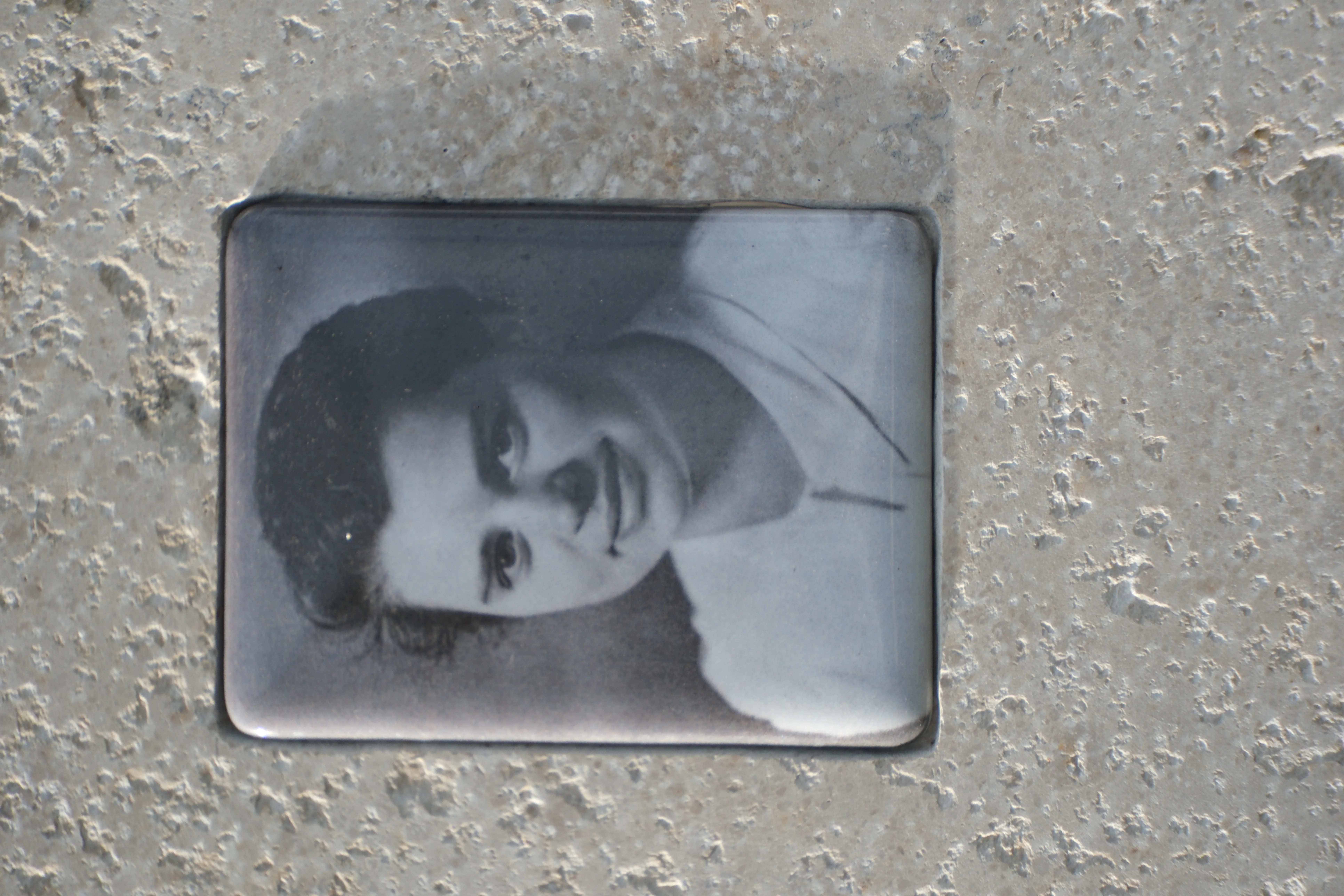
Image from Wikipedia
Image from Wikipedia
Maria Imma Mack: The Silent Heroine of Dachau, Whose Courage Resonates to This Day
A nun between faith, danger, and lived humanity
Maria Imma Mack, born as Josefa Mack on February 10, 1924, in Möckenlohe near Eichstätt and died on June 21, 2006, in Munich, is one of those personalities whose life story extends far beyond her own biography. As a nun of the Congregation of the Poor School Sisters of Our Lady in Munich, she became a secret helper for the prisoners of the Dachau concentration camp under the alias "Mädi." Her actions represent civil courage, faith, and a quiet yet uncompromising form of resistance.
Those who engage with Maria Imma Mack encounter not a loudly staged public figure, but a woman whose significance stems from her deeds. She provided food, letters, and liturgical items to prisoners, putting herself at great risk in a situation of existential threat. This combination of humility and determination makes her story still so poignant today.
Early Years in Möckenlohe and the Path to the Order
Josefa Mack grew up in Möckenlohe, a place in the Eichstätt region. Her deep faith early on led her to the environment of the Poor School Sisters of Our Lady in Munich. At the age of 16, she went for training at the sewing teachers' seminar of the order in Munich-Au, where her life path connected with the religious and social practice of her community.
This early shaping is crucial for understanding her later role. Maria Imma Mack was not a passive observer of history but a young nun who grew up in a strictly ordered religious world and nonetheless developed the courage to respond concretely to the injustices of her time. Her biography shows how spiritual discipline can lead to action.
Dachau 1944: The Beginning of a Dangerous Mission
In 1944, Maria Imma Mack first came to the Dachau concentration camp. What began as a quest for flowers for the Munich convent led her directly into the reality of the concentration camp and the forced labor there. She witnessed the suffering of the prisoners and decided not to look away but to take action.
From May 1944, she smuggled food, medication, altar wine, hosts, and candles into the camp. She hid the items in her basket and helped people who were suffering from hunger, illness, and indignity. The sources clearly indicate that she acted under great danger; the threat of severe penalties was a constant companion of this silent resistance.
“Mädi” and the Form of Quiet Resistance
Under the alias "Mädi," Maria Imma Mack became a reliable, pragmatic help for many prisoners. Her support was not spectacular in an outward sense, but it had an immediate effect. Especially in a system of dehumanization, food, letters, and liturgical items could mean hope, comfort, and dignity.
The core of her story lies in this practical charity. She provided not only goods but also a signal: people in the Dachau concentration camp were not forgotten. That she acted from a context of faith connects her deed with a religious attitude that understood faith not as a retreat but as a commitment to help.
Memory and Recognition After 1945
After the war, Maria Imma Mack was honored several times for her actions. The available sources document, among other things, the awarding of the Bavarian Order of Merit in 1986. Such accolades not only recognize personal bravery but also the moral significance of her actions for the historical memory of Bavaria and the city of Munich.
She is also remembered in her birthplace and in Munich. In Möckenlohe, a commemorative plaque was installed in honor of her 100th birthday in 2024. The state capital Munich also features the Imma-Mack-Weg as a memorial to her. These forms of commemoration show that her story does not disappear into archives but remains present in public spaces.
The Written Legacy: Memories as a Historical Source
An important source about the life of Maria Imma Mack is her memoir "Why I Love Azaleas: Memories of My Trips to the Dachau Camp Plantation from May 1944 - April 1945." Even the title hints at the tension between an seemingly everyday, almost poetic motif and the brutal reality of the concentration camp. The book helps to make her perspective audible.
Such autobiographical testimonies are particularly valuable for historical classification. They connect personal memory with concrete events and show how a single life path can become an important building block of contemporary history. In the case of Maria Imma Mack, faith, danger, and a sense of responsibility condense into an impressive historical document.
Historical Context and Cultural Significance
Maria Imma Mack stands alongside those women who, during the National Socialist regime, silently rescued, supported, or at least preserved a piece of humanity for others. Her actions are part of the history of Catholic resistance and the culture of remembrance surrounding the Dachau concentration camp. It demonstrates that civil courage is not always visible in grand gestures, but often in the repetition of small, risky actions.
Culturally, her life story is also significant because it sharpens the moral dimension of remembrance. The sources speak of a young nun who acted under the most difficult circumstances and was later described as a "humble heroine." This phrasing aptly captures the nature of her contributions: not heroically in a loud sense, but heroically through consistency, humility, and compassion.
Why Maria Imma Mack Continues to Fascinate Today
Maria Imma Mack fascinates because her biography is not a simple success story, but a story of conscience. It shows how spirituality, courage, and practical help can combine into an attitude that provides orientation in the darkest times. It is in her reserve that a special radiance lies.
Those interested in contemporary history, Catholic culture of remembrance, and the people behind great events will find in her life an impressive example. Her story reminds us that humanity can exist even where systems are designed to destroy it. Therefore, Maria Imma Mack remains a figure whose life path deserves respect and whose legacy should continue to be told.
Conclusion: A Quiet Voice that Remembers Loudly
Maria Imma Mack represents a form of courage that does not rely on pathos and is therefore profoundly impactful. Her assistance to Dachau concentration camp prisoners, her religious ethos, and her later recognition make her an important figure in Bavarian and German culture of remembrance. What is particularly intriguing about her is the connection between humility and determination, between faith and action.
Those who want to not only read about history but understand it should engage with Maria Imma Mack and visit the places of her memory. Her life demonstrates how much power lies in quiet gestures when they are performed at the right time and under the greatest danger.
Official Channels of Maria Imma Mack:
- Instagram: No official profile found
- Facebook: No official profile found
- YouTube: No official profile found
- Spotify: No official profile found
- TikTok: No official profile found
Sources:
- katholisch.de - With bike and sledge: how a nun helped concentration camp prisoners
- Donaukurier - Adelschlag remembers its great daughter Sister Imma Mack
- State Capital Munich - Imma-Mack-Weg
- SSND Congregational Website - Sister M. Imma Mack
- SSND Congregational Website - History: Sister M. Imma Mack
- Blessed KZ Dachau - Josefa Mack
- German Digital Library - Josefa Maria Imma Mack
- ZVAB - Why I Love Azaleas
- Wikipedia: Image and text source