
Marie-Elisabeth Hecker
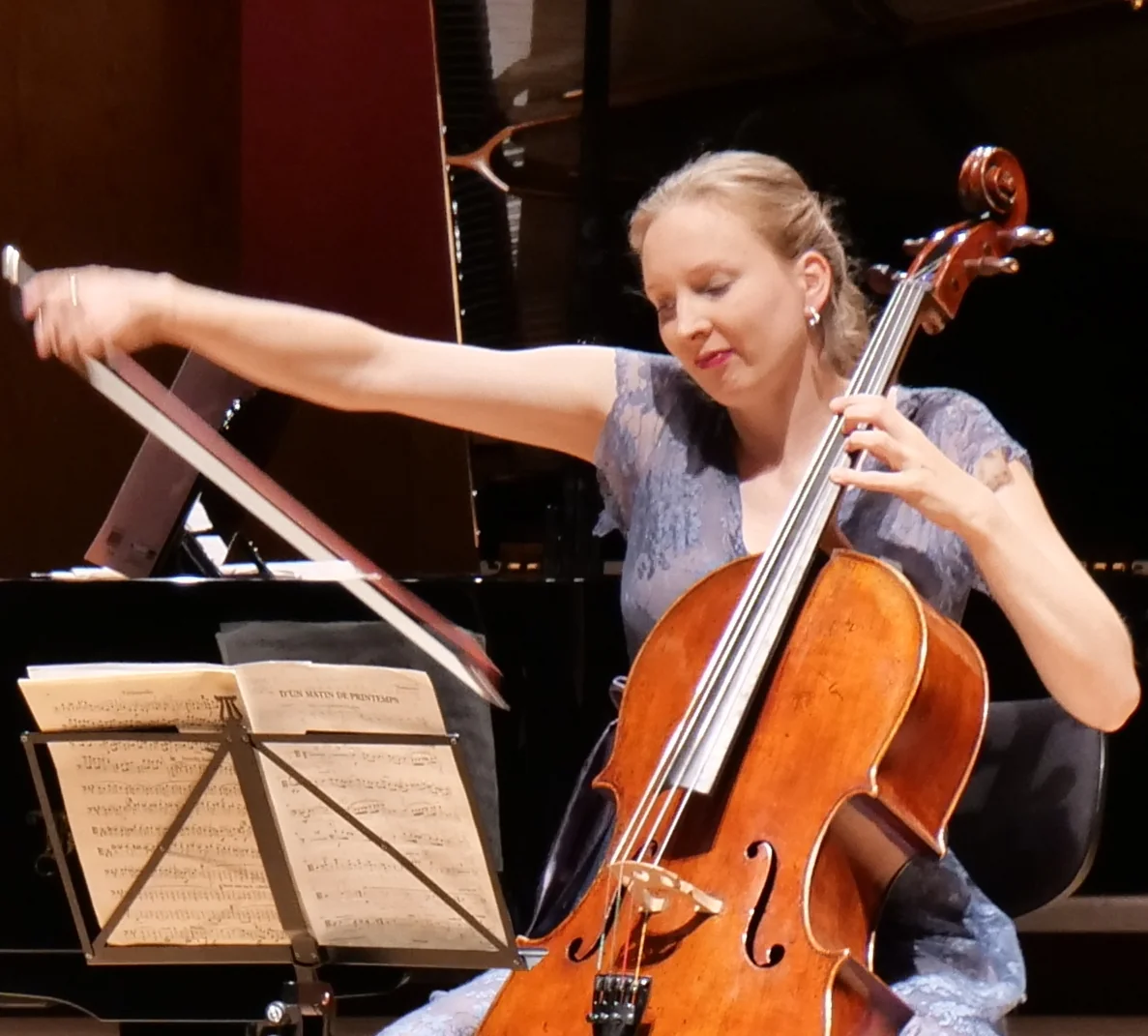
Image from Wikipedia
Image from Wikipedia
Marie-Elisabeth Hecker – The German Cellist with Heart, Depth, and Radiance
An artistic portrait that touches: From Zwickau to the great stages of the world
Marie-Elisabeth Hecker represents a musical career that combines precision, empathy, and artistic development. Born in Zwickau in 1987, she found her instrument's language early on and shaped it into a distinctive stage presence. Her international breakthrough came in 2005 in Paris – since then, she has been continuously expanding her repertoire between solo, chamber music, and concert activities. Her discography documents an artist who translates tonal colors, form consciousness, and expressive power into large musical arcs. (de.wikipedia.org)
Early Years and Education: Sound Search with Clear Direction
Growing up in Kirchberg near Zwickau, Hecker began playing the cello at a young age; the Robert Schumann Conservatory shaped her foundations before Peter Bruns took on a central mentoring role. Competitions such as "Jugend musiziert" early on solidified her technique, intonation, and musical maturity, which was reflected in a natural tone and a singing legato. Later, she deepened her education at the Hochschule für Musik und Theater Leipzig, studying with Heinrich Schiff and refining her interpretation and sound conception in masterclasses with Anner Bylsma, Bernard Greenhouse, Frans Helmerson, Gary Hoffman, and Steven Isserlis. These stages created the foundation for her current stylistic versatility and interpretative balance between historical awareness and modern sound aesthetics. (de.wikipedia.org)
The Breakthrough in Paris: Rostropovich Competition 2005
In November 2005, Hecker won the Concours de violoncelle Rostropovitch in Paris as one of the youngest participants – a milestone that significantly shaped her artistic direction. Notably, she received not only the first prize but also two special awards, making history in the competition. This success opened doors to renowned venues, top orchestras, and festivals; at the same time, it set a high standard for her further artistic development. From that moment on, her name became associated with tonal depth, structural clarity, and a wide yet always focused sound. (en.wikipedia.org)
International Music Career: Orchestras, Stages, Conductors
Since her triumph in Paris, Hecker has been a guest with leading orchestras and has worked with conductors known for their interpretative diversity. Engagements have taken her to, among others, the Gewandhausorchester Leipzig, the Staatskapelle Berlin, the BBC Symphony Orchestra, the Filarmonica della Scala, the Antwerp Symphony Orchestra, as well as orchestras in Paris, Luxembourg, and Tel Aviv. These collaborations refined her sensitivity to orchestral colors, dynamic dramaturgy, and balance in the expansive sonic space – a quality that positions her playing between soloistic brilliance and chamber music listening. (dornmusic.com)
Chamber Music as an Artistic Laboratory: Partnerships and Festival Work
Hecker's chamber music work is particularly formative, often alongside her husband, pianist Martin Helmchen. In trios and duos with partners like Antje Weithaas, she has developed an ensemble culture that considers phrasing, articulation, and room acoustics as equally important parameters. On leading stages – from Wigmore Hall to Carnegie Hall to Elbphilharmonie – she combines communicative awareness with a subtle balance between voice leading and structure. Concert documents, such as those from the Schwetzinger SWR Festival, showcase her intuitive responsiveness and her ability to intertwine form and emotion in chamber music compellingly. (dornmusic.com)
Discography and Recordings: Depth of Repertoire, Label Profiles, Recordings
Recordings form a central pillar of her discography. She first made her mark with Brahms' cello sonatas, followed by Schubert's Arpeggione Sonata, Piano Trio No. 2, and a notable Elgar album with concerto and piano quintet – releases that document her tonal fingerprint at Alpha Classics: a singable tone, differentiated bow technique, and audible articulation. In 2025, "From Eastern Europe" was released, a large double album containing 22 pieces that combines Russian and Eastern European hues between Shostakovich, Schnittke, and Stravinsky into a dramaturgically clever panorama. The recordings showcase repertoire knowledge, stylistic integrity, and a clear production profile. (kronbergacademy.de)
The reception in the specialized press emphasizes the coherence of her discography: reviews repeatedly highlighted the combination of warmth, structural awareness, and color palette. Platforms like Presto Music honored the Russian sonatas in 2025 as a cohesive interpretive project – an example of how Hecker thinks dramaturgical arcs across cycles and connects articulatory precision with narrative breath. Overall, her discography represents a nuanced understanding of repertoire that intelligently links historical contexts, movement dramaturgy, and contemporary sound aesthetics. (prestomusic.com)
Style, Technique, and Artistic Development: Sound Speech Instead of Effects
Hecker's interpretation focuses on singability, nuanced vibrato, and the concept of "sound speech": phrases unfold organically, crescendos possess direction, and rubati remain musically grounded. Her bowing connects robustness in articulatory accents with elastic softness in lyrical passages; the left hand shapes intonational colors that depict tonality and harmony plastically. In sonatas and trios, she uses the cello's voice as a carrying middle ground, modulating register changes – from the chesty low register to the tenor height – thus making the architecture of a movement audible. She does not view contemporary works as stylistic oddities but rather as extensions of a developed idiom. (kronbergacademy.de)
Pedagogy and Social Engagement: Professor, Mentor, Music Road Rwanda
Beyond the stage, Hecker engages in teaching and outreach: since August 2017, she has served as a professor at the Hochschule für Musik Carl Maria von Weber Dresden and regularly conducts masterclasses – including in collaboration with the Kronberg Academy. This educational profile strengthens her expertise in repertoire knowledge, technique impartation, and ensemble playing. Moreover, through the project "Music Road Rwanda," she brings musical education to another cultural context: workshops, performances, and long-term collaborations intertwine artistic activity with social responsibility. (dornmusic.com)
Awards, Curatorial Role, and Artistic Responsibility
Following the Rostropovich crown in 2005, she received the Borletti-Buitoni Trust Award in 2009 – a confirmation of her artistic substance and international perspective. In 2022, Hecker and Helmchen were awarded the Pablo Casals Award from the Kronberg Festival for their social engagement in Rwanda. These awards frame a career where artistic excellence and social consciousness come together – a model that makes interpreters visible as cultural actors beyond the stage. (kronbergacademy.de)
Current Projects 2024/2025: New Releases, Management, Program Ideas
With the double CD “From Eastern Europe” (release date: June 13, 2025), Hecker, along with Martin Helmchen, presented a thematically curated program that combines Soviet-Russian and neoclassical perspectives – aesthetically characterized by transparency, rhythmic elasticity, and articulatory precision. The release deepened her profile at Alpha Classics and confirmed the duo's strength in cyclically conceived repertoire arcs. (qobuz.com)
In January 2025, her collaboration with the international management Dorn Music was announced – a step that positions strategic project development, international tour planning, and curatorial collaborations on a modern, globally connected basis. Concert documents from 2024/2025 – such as the Schwetzingen program with Weithaas and Helmchen, broadcast on June 11, 2025 – also illustrate the continuity of her chamber music thinking in real concert acoustics. (thestrad.com)
Cultural Context: Tradition, Present, and Responsibility
Hecker's artistic profile combines German Romanticism, French sound culture, and Slavic expressiveness into a contemporary-readable aesthetic. In music history, she stands in the tradition of singing cellists – a lineage that extends from Casals' sound ethos through Rostropovich to today's interpreters. Her programs emphasize dramaturgical logic and sonic storytelling; at the same time, her engagement in teaching and with “Music Road Rwanda” marks an expansion of the role understanding: the artist as a mediator, as a partner in the social space, and as a creator of cultural resonance. (dornmusic.com)
Conclusion
Marie-Elisabeth Hecker captivates because she transforms technical excellence into emotional authenticity, creating a touching artistic presence. Her discography, her chamber music network, and her work with leading orchestras depict a musician who thinks of sound as language and shapes every work from its inner logic. Those who experience her interpretation live will discover how careful phrasing, subtle dynamics, and a warm, resonant cello timbre converge into an intense listening experience. A clear call: Listen to this artist on stage – where music, space, and audience merge into a unique moment. (dornmusic.com)
Official Channels of Marie-Elisabeth Hecker:
- Instagram: No official profile found
- Facebook: No official profile found
- YouTube: No official profile found
- Spotify: No official profile found
- TikTok: No official profile found
Sources:
- Wikipedia – Marie-Elisabeth Hecker
- Dorn Music – Artist Profile (Management)
- The Strad – Announcement on Management Change, January 17, 2025
- Kronberg Academy – Artist Biography
- Qobuz – Album “From Eastern Europe,” Release June 13, 2025
- ORF Ö1 – Concert Broadcast (Schwetzingen), June 11, 2025
- Apple Music Classical – “From Eastern Europe”
- Presto Music – Reviews & Releases
- Wikipedia: Image and Text Source
Upcoming Events
Marie-Elisabeth Hecker and Martin Helmchen
Chamber music with goosebumps in Bad Kissingen: Hecker and Helmchen bring Beethoven, Weinberg, Bloch, and Mendelssohn to the Rossini Hall. Experience it now! #KissingerSommer
Marie-Elisabeth Hecker and Martin Helmchen – Duo Evening in the Rossini Hall
Great chamber music in the Rossini Hall: Hecker and Helmchen with Mendelssohn and Weinberg. On 18.07.2026 in Bad Kissingen. Close to the sound, intense, touching – secure your tickets now. #ChamberMusic