
Piotr Anderszewski
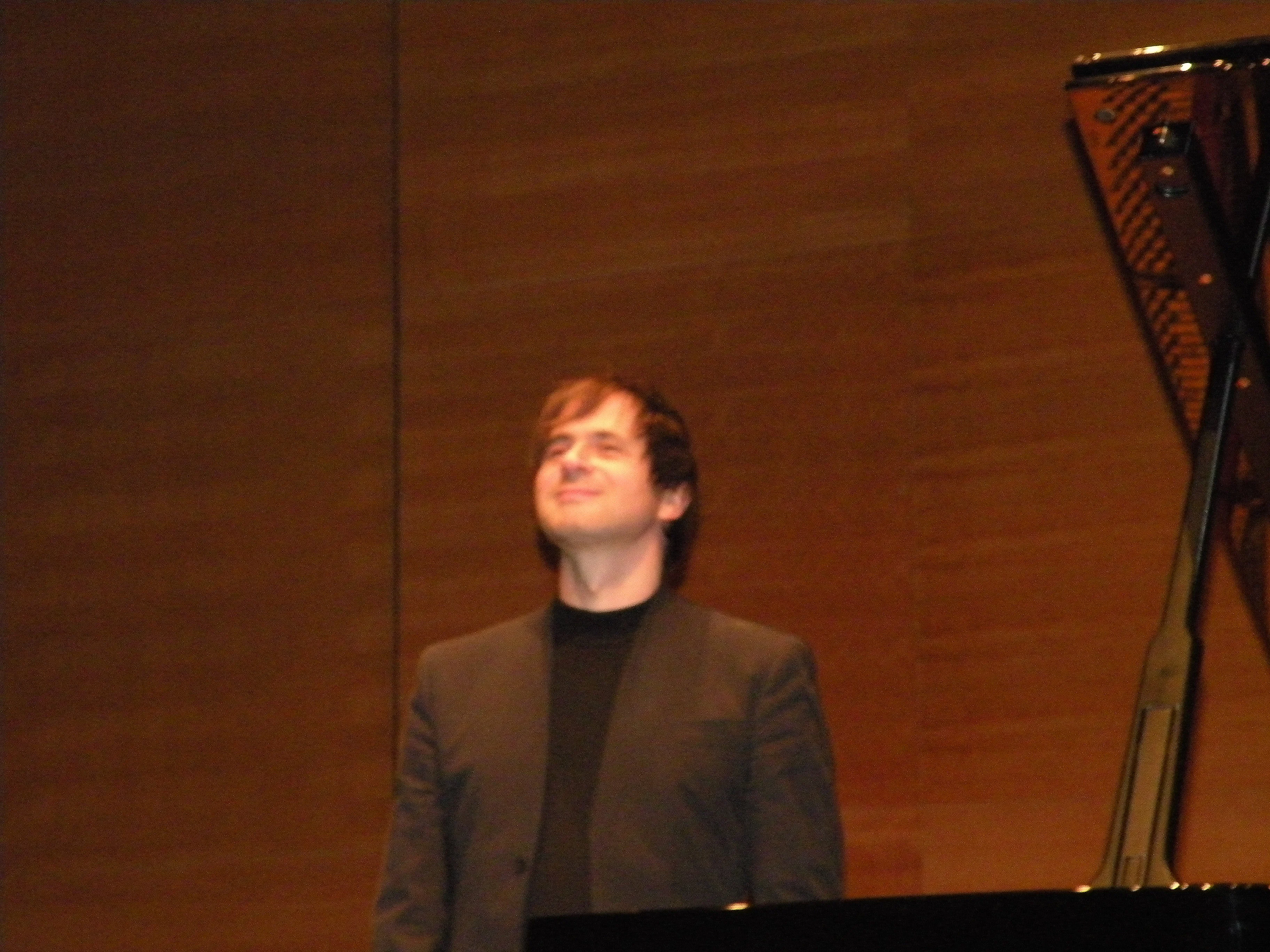
Image from Wikipedia
Image from Wikipedia
Piotr Anderszewski – Master Pianist Between Uncompromising Integrity and Poetic Sound Speech
An Artist Portrait That Brings Music Culture, Discography, and Artistic Development to Life
Piotr Anderszewski, born in 1969 in Warsaw, is one of the most prominent pianists of his generation. His music career is characterized by uncompromising fidelity to the works, individual programming, and a stage presence that combines technical transcendence with quiet intensity. Early on, he set artistic standards by not following career planning but rather an inner necessity: preferring to publish less but shaping every detail of the composition, arrangement, and sonic architecture until a cohesive, personal statement emerges. This attitude shapes his discography and makes every new release an event.
Background, Education, and Early Influences
Anderszewski grew up in a culturally rich family in Warsaw. His artistic development took him through the Chopin Academy in Warsaw and studies in Strasbourg and Lyon. His international horizons opened early: a scholarship year at the USC Thornton School of Music in Los Angeles and encounters with formative mentors such as Murray Perahia, Fou Ts’ong, and Leon Fleisher sharpened his sound ideal. From this school of accuracy, he developed a technique that does not focus on virtuoso effects but rather on articulatory precision, voice leading, and the dramatic logic of a movement – in short: pianistic rhetoric as a means of expressive truthfulness.
The Leeds Moment 1990: Artistic Integrity as a Trademark
Anderszewski attracted international attention in 1990 at the Leeds Piano Competition when he left the stage in the semifinals because his interpretation of Webern's Variations op. 27 did not meet his own standards. This rare act of artistic self-criticism became an identity-defining moment in his career. Instead of suffering damage, he marked a clear stance: music as a serious, non-negotiable engagement with structure, sound, and meaning. Shortly thereafter, he made his London debut at Wigmore Hall – the beginning of a career that would take him to the world's central concert halls.
International Career: Orchestras, Venues, Playing–Conducting from the Piano
Anderszewski has performed with top orchestras such as the Berlin Philharmonic, the Royal Concertgebouw Orchestra, the London Symphony Orchestra, the Chicago Symphony, and the Philadelphia Orchestra. His music career also includes working as a conductor from the piano with renowned chamber orchestras – a practice that deepens his interpretative fingerprint: the pianist as an architectural designer who thinks of form, phrasing, and balance in a single breath. Recitals have taken him to the great halls of Vienna, Amsterdam, London, New York, Tokyo, and Los Angeles – always with programs that present classical canon works in a new light.
Awards and Recognition: Authority Through Performance
The list of his honors underscores his authority: in 2002 he received the Gilmore Artist Award, one of the most prestigious awards for pianists worldwide. As early as 2001, the Royal Philharmonic Society honored him as “Best Instrumentalist”; in 1999 he was awarded the Szymanowski Prize. In 2021, he followed with the Gramophone Award in the “Piano” category – a milestone that documents his artistic maturity in the core repertoire. Additionally, he has two GRAMMY nominations that highlight his international impact in the Anglo-American music scene.
Discography & Milestones: Diabelli, Bach, Szymanowski, Schumann
His discography is slim but highly curated – a prime example of quality-oriented production. With the Diabelli Variations, he released a reference recording in 2000/2001 that exemplarily encapsulates the architecture of the cycle, its contrapuntal density, and rhetorical complexity. Early recordings with Bach, Beethoven, and Webern reveal the analytical core of his playing; later, Chopin and Schumann follow with finely tuned cantabile and breathing rubato culture. A deeply artistic concern remains Szymanowski: Anderszewski's interpretations unveil the colors, modal ambivalence, and dance-like breath of this music – sonically refined, rhythmically buoyant, and always structurally aware.
Recent Productions: From Bach to Bartók, Janáček, and Szymanowski
With excerpts from Bach’s Well-Tempered Clavier II, Anderszewski presented a recording in 2021 that combines transparency and poetic calm – a pianistically shaped sound space where voice deployment, pedaling, and articulation interlock like fine gears. In 2024, an album emerged that intelligently intertwines works by Bartók, Janáček, and Szymanowski: Bagatelles, Mazurkas, and miniatures as a panorama of early modern Central Europe. The interpretative focus lies on timbral dramaturgy, rhythmic elasticity, and a clear, non-sentimental singing line. Critics highlighted the richly colored Szymanowski Mazurkas and nuanced Bartók Bagatelles – a reappraisal of the repertoire beyond mere virtuosity.
Latest Releases and Projects: Present and Near Future
In November 2024, Anderszewski focused on a “new” Chopin waltz and selected mazurkas – a miniature program that condenses the essence of Chopin's dance poetics with a defined pulse and smooth agogic. Scheduled for January 16, 2026, is “Brahms: Late Piano Works” – an artistically coherent project. The late pieces op. 116–119 demand maximum inner listening: internal tension instead of external display, a game of chiaroscuro, where Anderszewski's ability for fine sound shading and symphonic voice leading in the left hand finds ideal conditions. In parallel, he continues his international recital activity in Europe, Australia, and beyond; his official tour schedule documents the density and variety of the upcoming seasons.
Style and Artistic Development: Architecture, Articulation, Breath
Anderszewski's artistic development can be described as a continuous condensation: he avoids repertoire "completeness" in favor of aesthetic key experiences. His playing favors clearly structured transitions, breathing legato, and a decisiveness in touch that models colors without hardening the sound image. In Bach, he convinces with polyphonic clarity, in Beethoven with dramatic inner organization, in Schumann with the balance between impulse and structure, in Chopin with the rubato-led breathing of the phrase. In Szymanowski and Janáček, his sense for idiomatic rhythm, folk music impulses, and instrument-specific resonance spaces emerges.
Chamber Music, Collaborations, and Artistic Partnerships
In chamber music, Anderszewski engaged in dialogue with formative violinists of his generation – a school of listening that further sharpened his solo work. His collaboration with top quartets and the conducting from the piano with chamber orchestras has made the pianist a musical "director," mixing voices, organizing sound balance, and designing dramaturgical curves for an evening. This double perspective – soloist and designer – is central to his authority as an artist.
Reception and Cultural Influence
The reactions from the press and institutions locate Anderszewski at the intersection of intellectual penetration, flawless technique, and poetic subtlety. His productions for Warner Classics serve as reference points for current pianism: not as mere documentation, but as composed sound essays, where interpretation, production, and program dramaturgy mutually reinforce each other. Awards such as the Gramophone Award, the RPS Award, and the Gilmore Artist Award, in this perspective, are less laurels than confirmations of a consistent artistic ethic.
Film Portraits and Artistic Self-Image
Several documentaries by Bruno Monsaingeon illuminate Anderszewski's working methods: the meticulous score work, the search for the "correct" tempo as an expression value, the insistence on sonic purity. These cinematic insights reveal an artist who explores the boundary between the work and performance and views interpretation as an ongoing composition in the moment – an experience that shapes his live performance just as much as his carefully curated discography.
Conclusion: Why Listen to Piotr Anderszewski – and Experience Him Live?
Because Anderszewski rearranges the seemingly familiar: he imbues Bach with dance and transparency, Beethoven with dramatic logic, Chopin with breath and radiance, Schumann with poetic clarity, Szymanowski with color and pulse, Brahms with intimate grandeur. His music career tells of artistic development without compromise, authority without loudness, virtuosity without vanity. Those who hear his playing live experience how sonic micro-decisions – weight, pedal, time – create a whole musical world. This is precisely where the enduring fascination with this pianist lies.
Official Channels of Piotr Anderszewski:
- Instagram: No official profile found
- Facebook: No official profile found
- YouTube: No official profile found
- Spotify: No official profile found
- TikTok: No official profile found
Sources:
- Piotr Anderszewski – Official Website: Concert Dates
- Warner Classics – Artist Page Piotr Anderszewski
- Warner Classics – Bartók, Janáček, Szymanowski (Release 26.01.2024)
- Warner Classics – Chopin: The New Waltz & Mazurkas (Release 05.11.2024)
- Warner Classics – Brahms: Late Piano Works (Release 16.01.2026)
- The Guardian – Review of the Album 2024
- Apple Music Classical – Artist Profile Piotr Anderszewski
- Apple Music Classical – Bartók/Janáček/Szymanowski (2024)
- Apple Music Classical – Brahms: Late Piano Works (2026, Pre-Release)
- GRAMMY.com – Artist Profile & Nominations
- Gramophone – 2021 Award Winners (Piano)
- medici.tv – Artist Profile
- Steinway & Sons – Steinway Artist Profile
- Wikipedia: Image and Text Source
Upcoming Events
Piotr Anderszewski – Piano Recital in the Rossini Hall
Piotr Anderszewski - Piano Recital in the Rossini Hall, Bad Kissingen
Piotr Anderszewski at the Rossini Hall Bad Kissingen
anders – So Close
Piotr Anderszewski: Piano Recital in Bad Kissingen
Piano Recital with Piotr Anderszewski