
Rhythm and Blues
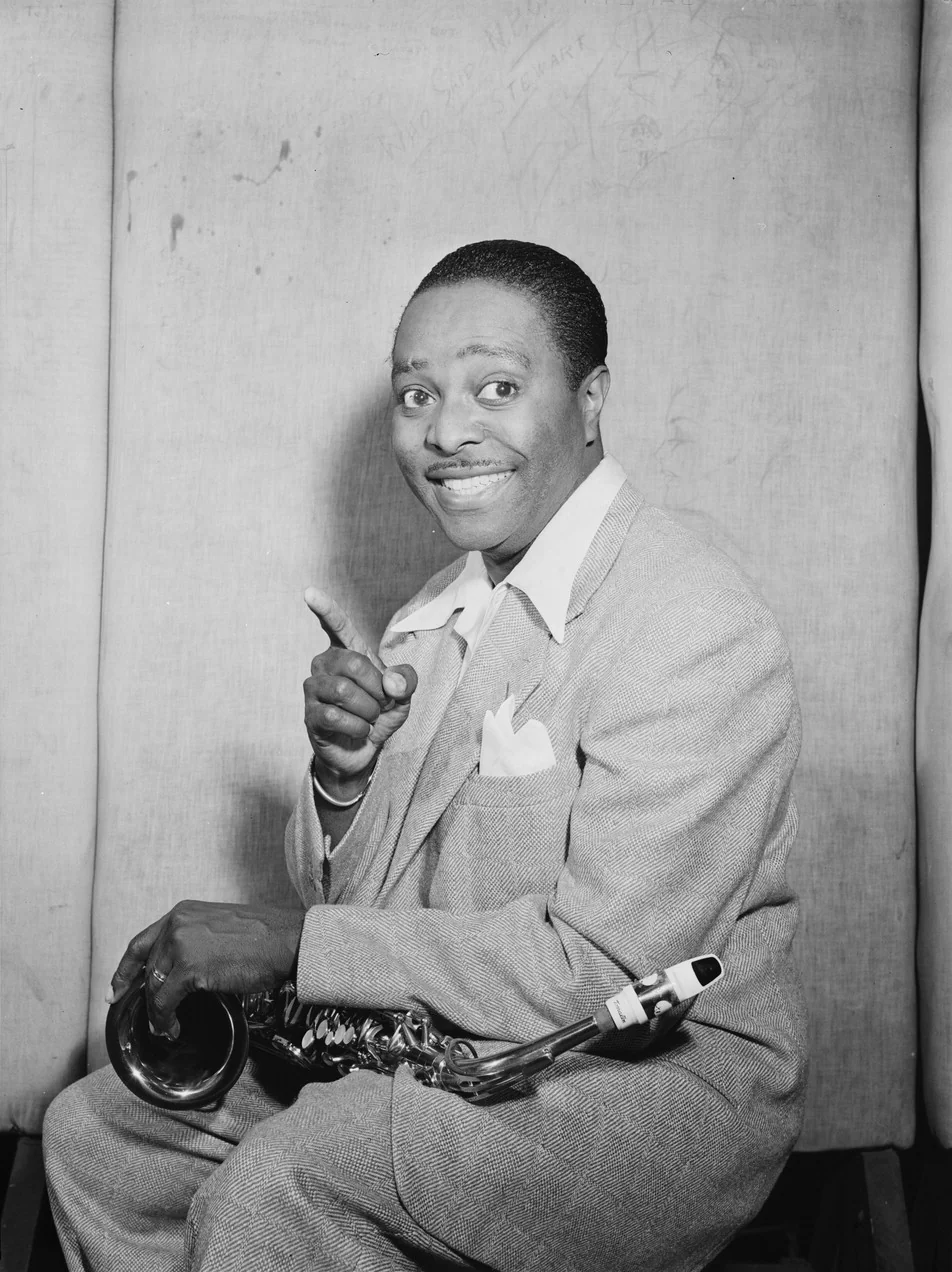
Image from Wikipedia
Image from Wikipedia
Rhythm and Blues (R&B) – The Pulsating Root of Rock, Soul, and Contemporary R&B
From the Dance Halls of the 1940s to a Global Pop Language: The History of a Genre That Never Stands Still
Rhythm and Blues, often abbreviated as R&B, refers to a rhythmically accented form of African American pop music that emerged in the 1940s. It electrified the blues, combined elements of jazz and big band, and laid the foundation for rock ’n’ roll, soul, funk, and contemporary R&B. The term replaced the discriminatory categorization "Race Records" in 1949, marking a linguistic turning point in the music industry. From this historically charged musical journey of an entire genre, a family of styles has developed that continues to shape the charts, absorb new production techniques, and live on in countless subgenres.
R&B stands for physical grooves, syncopated backbeats, catchy bass lines, and expressive vocal melodies. Its stage presence, whether in a smoky club or in a grand hall, translates social realities into immediate musical experiences. In the discography of the 20th century, R&B singles shine with danceability and emotional directness; in the 21st century, contemporary R&B reflects hybrid arrangements, intricate compositions, and cutting-edge production, often closely intertwined with hip-hop aesthetics, vocal melismas, and electronic textures.
Term and Breakthrough: How R&B Became the New Name of a Movement
The term "Rhythm and Blues" was coined in the late 1940s in the context of the U.S. magazine Billboard and replaced the designation "Race Records" in relevant charts on June 17, 1949. Behind this linguistic shift lies a cultural-historical correction that summarized African American mainstream music under a more respectful collective term. At the same time, the industry professionalized the categorization of the vibrant club scene of the time, where boogie patterns, walking bass, and driving drums dominated the sound. With the introduction of the new chart category, R&B productions received the necessary visibility to capture nationwide radio play, jukebox penetration, and record sales.
The early R&B hits combined blues formulas with swinging brass section work and a relentless emphasis on the offbeat. Saxophone solos, percussive piano riffs, and the electric guitar shaped the sound. These arrangements served not only as danceable entertainment music but became the engine for a young urban identity. Dance crazes, call-and-response in singing, and pointed storytelling lyrics made R&B a mirror of social dynamics – fast, direct, modern.
From Louis Jordan to Dinah Washington: The Golden Age of Singles
The late 1940s and early 1950s are considered the heyday of the single-driven R&B market. Number-one hits document this triumph: Songs like "Trouble Blues" (Charles Brown Trio), "The Huckle-Buck" (Paul Williams and His Hucklebuckers), or "Saturday Night Fish Fry" (Louis Jordan and His Tympany Five) set distinctive stylistic markers. Dinah Washington, Wynonie Harris, Amos Milburn, John Lee Hooker, Big Jay McNeely, Jimmy Witherspoon, and The Orioles also shaped the repertoire that rotated nationwide in jukeboxes and defined the sound of dance floors.
This hit culture showcases the DNA of the genre: short, concise forms; catchy hooks; strong backbeats; solos that combine musical virtuosity with club-friendly economy. Altogether, a school of groove emerged, whose elegance and clarity – often cast in 12-bar schemes – transmitted from the intimate club atmosphere to the radio waves, captivating audiences across genres.
Midwives of Rock ’n’ Roll, Breeding Ground for Soul
From the stylistic energy of R&B, rock ’n’ roll emerged in the early 1950s. The electric guitar moved further into the spotlight, shuffle grooves were intensified, tempos tightened, and stage presence took on a rebellious, youth-cultural hue. During this phase, there was also a "whitening" of the sound, as producers and musicians outside of African American communities adopted, popularized, and reinterpreted elements of R&B for commercial purposes. At the same time, the connection between R&B and gospel – driven by call-and-response, soulfulness, and sacred energy – led to the emergence of soul music in the late 1950s.
The transitions show how R&B acted as an aesthetic catalyst: It was a bridge between big band swing and rock, between secular blues and spiritually charged gospel. This artistic development reflects a key observation of music history: R&B is less a rigid category and more a process in which composition, arrangement, and performance are constantly redefined.
"Maximum R&B" and British Appropriations
In the 1960s, British bands also looked fascinated at American R&B. Groups that mixed Chicago blues, R&B, and early rock marketed their live shows with formulas like "Maximum R&B." Thus, R&B became an international quality label for raw energy, groove competence, and club-ready intensity. Its impact reached far beyond stylistic labels: R&B defined a performance attitude that placed authenticity, feedback, and spontaneous expressiveness at its center, significantly influencing the stage chemistry of the Beat era.
This transatlantic reception fosters the lasting authority of the genre: whether as a reference on tour posters, a curatorial principle for club nights, or an educational vocabulary in pop music communication – R&B remains a seal of quality for rhythm competence, vocal expressiveness, and band-driven tightness.
Name Changes, Market Logics, and the Expansion of the Spectrum
The industrial history of the genre is reflected in its chart designations: The introduction of the "Rhythm and Blues" charts in 1949 was followed over the decades by renamings that responded to changing market and stylistic realities. In the 1980s, the term "R&B" increasingly solidified as a roof for African American pop music with a broader stylistic range, before it was eventually officially flanked with "R&B/Hip-Hop." Methodical adjustments – such as the inclusion of digital downloads and streaming – document the ongoing modernization of measurement tools.
These institutional shifts are more than mere label changes: They mark how R&B accompanies pop modernity, absorbs and shapes trends. The close interlinking with hip-hop is not a dilution but an expression of a shared production aesthetic: drum machines, sampling, syncopated hi-hats, sub-bass frequencies, and melodically nuanced singing now coexist naturally.
Contemporary R&B: Production, Vocals, and Hybrid Aesthetics Since the 1980s
With the emergence of contemporary R&B since the 1980s, pop, funk, and soul have been newly interconnected. Characteristic are elegant vocal arrangements with melismas, intricate sound design, and a production that blends analog warmth with digital tools. In the 1990s and 2000s, electronic textures and drum programming shaped the aesthetic, while the closeness to hip-hop became evident in beats, featured collaborations, and remix cultures. This "Modern R&B" sound evolved into subgenres such as Progressive R&B or Electro-R&B, conquering playlists, radio formats, and major award ceremonies.
At the same time, the core quality of R&B remained intact: emotionality in the voice, narrative lyrics, a clear song dramaturgy between verse, pre-chorus, and hook, and a production that balances intimacy and dynamics. This mixture accounts for the genre's unabated relevance in the global pop landscape to this day.
Discography and Reception: From Jukebox Hits to Award Stages
The classic R&B discography is single-centered: pointed tracks that create mood within a few bars. Since the digital era, EPs and albums with conceptual arcs have come more into focus, while streaming has extended the half-life of singles and revitalized catalog titles. Critics continuously appreciate R&B for its innovation in composition, arrangement, and production. Major award ceremonies also feature R&B categories, where modern stylistic facets – from traditional to progressive – can be found.
This recognition is reflected not only in awards entries but also in curatorial institutions, foundations, and archives that secure the cultural heritage of the genre. The ongoing dialogue between history and the present is reflected in retrospectives, educational programs, and chart mechanisms that locate R&B as a living, continually evolving art form.
Cultural Influence: Language, Identity, Movement
R&B has always been more than just entertainment music. As an urban cultural form, it addresses themes such as love, desire, community, resistance, and self-assertion. On stage, gesture, fashion, dance, and song converge into a multimedia narrative that shapes generations – from the club to the mixtape to the TikTok challenge. Music history reads R&B as a continuum that makes African American creativity visible and acts as a global impetus for pop aesthetics.
Its influence extends into education and memory culture: foundations and initiatives preserve the works of pioneers, honor lifetime achievements, and anchor the genre in the cultural infrastructure. Thus, R&B remains present – in archives, in festivals, in curricula – and each new generation of producers finds material for stylistic developments within it.
Technique and Craft: From Groove to Production
Musically, R&B rests on clear, groove-oriented arrangements: backbeat on two and four, syncopated bass figures, tension-building turnarounds. In composition, hook economy often dominates – memorable choruses that point to the song's core. Vocally, vibrato, falsetto, call-and-response, and melismas play a central role. Production techniques such as layering, finely balanced reverb spaces, sidechain techniques, and detail-loving vocal edits are used to create both intimacy and presence.
This technical language refers to the professional practice behind the genre: songwriting camps, A&R curation, mastering standards, and playback design for live shows. R&B shows how closely aesthetics, technique, and performance are intertwined – and why its sound signatures remain so enduring.
Conclusion: Why R&B Sounds More Important Today Than Ever
Rhythm and Blues is the heartbeat of modern pop music. From a club-focused, blues-based dance music of the 1940s, it evolved into a global idiom that fueled rock, soul, funk, and hip-hop and continues to inspire contemporary productions today. Anyone who listens to R&B experiences condensed emotion, masterful vocal artistry, and groove architecture that ignites both on the dance floor and in headphones. Live, R&B unleashes its full force: the immediate connection, the shared pulse between stage and audience, the moment when the genre's history becomes the present.
Official Channels of Rhythm and Blues:
- Instagram: No official profile found
- Facebook: No official profile found
- YouTube: No official profile found
- Spotify: No official profile found
- TikTok: No official profile found
Sources:
- Wikipedia – Rhythm and Blues
- Encyclopaedia Britannica – Rhythm and Blues: Definition, History, Artists, Songs, & Facts
- Wikipedia – List of Singles in the Billboard R&B Charts 1949
- Wikipedia – Jerry Wexler
- Los Angeles Times – Jerry Wexler coined "rhythm and blues"
- Wikipedia – Hot R&B/Hip-Hop Songs: Chart History and Methodology
- Wikipedia – Contemporary R&B (German)
- Wikipedia – Contemporary R&B (English)
- Rhythm & Blues Foundation – Official Website
- Taylor Guitars – R&B as a Bridge Between Blues, Jazz, Rock’n’Roll, Soul, and Funk
- Wikipedia: Image and text source