
Sabin Tambrea
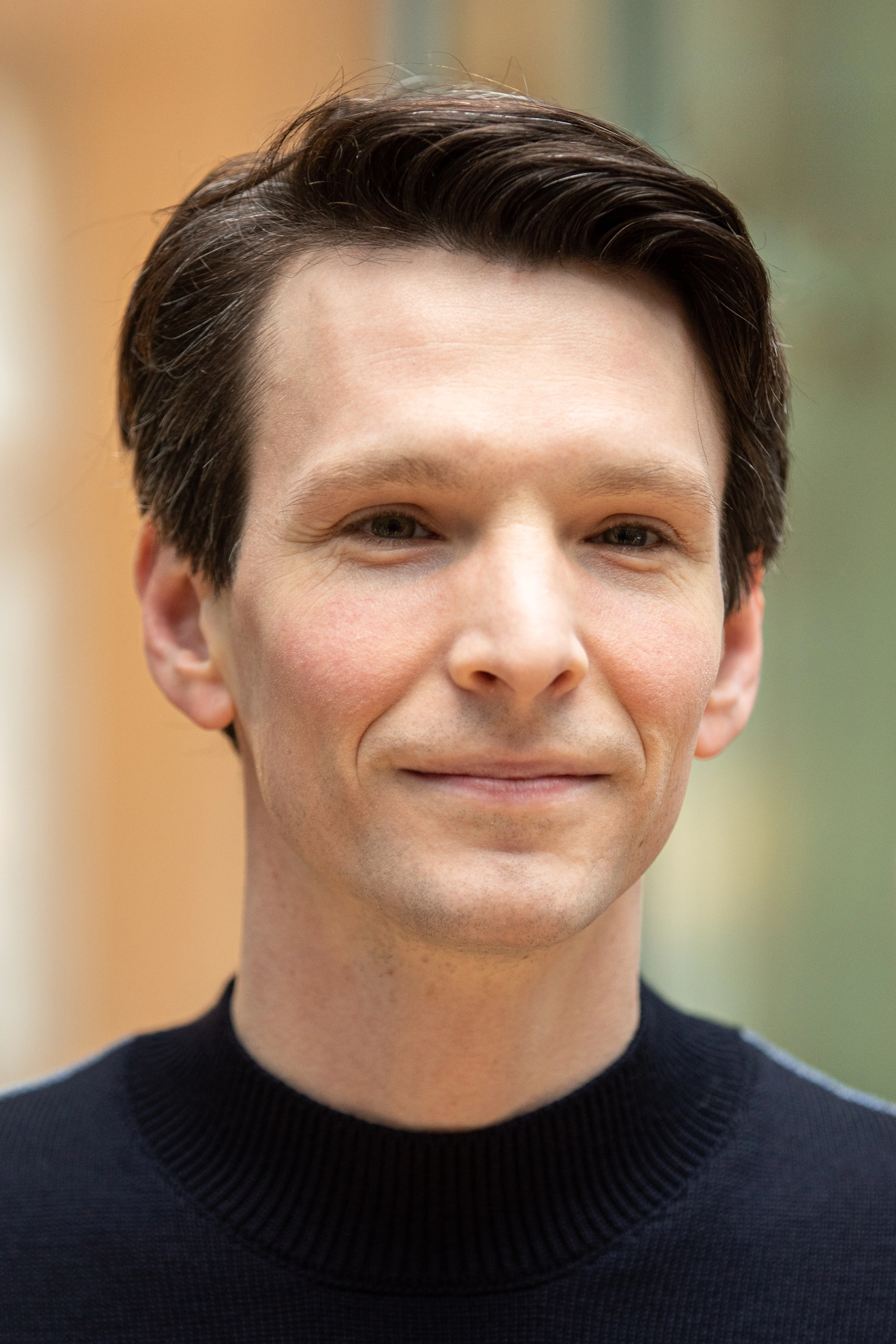
Image from Wikipedia
Image from Wikipedia
Sabin Tambrea: Between Stage, Film, and Literature – The Multifaceted Artist Biography of a Remarkable Talent
An Artist with Musical Roots, Cinematic Presence, and Literary Voice
Sabin Tambrea belongs to those rare artist personalities whose path cannot be confined to a single genre. Born in 1984 in Târgu Mureș, Romania, he grew up in Hagen and quickly developed into a quintessential voice of German theater, cinema, and later literature. His biography is shaped by heritage, discipline, and a remarkable artistic versatility that ranges from musical training to award-winning roles.
Tambrea's story doesn't begin just with film or prose, but in a musical family where instruments, stage, and expression were part of everyday experience. This very background gives his career a special depth: Tambrea thinks of art not in narrow categories but as a living form of interpretation, presence, and narration. It is precisely in this approach that the allure of his development lies.
Biographical Roots: Growing Up Between Migration, Music, and German Theater Tradition
Tambrea's family history is closely linked to the upheaval of the late 1980s. His father, an orchestral musician, left Romania in 1986; a year later, his mother followed with Sabin and his sister to Germany. Initially, the family lived in Marl, later moving to Hagen, where Tambrea grew up and had early contact with a culturally demanding environment. This experience of migration and new beginnings also influences his later literary work.
As a child, he received lessons in violin, viola, piano, and conducting. His stage debut came at the age of six as a soloist in the children's choir of the Theater Hagen. As a violinist, he participated multiple times in "Jugend musiziert" between 1994 and 2002, winning first place six times and becoming a member of the NRW State Youth Orchestra. This early musical socialization profoundly shaped his artistic sensibility.
The Path to Acting: Training, Ensemble Work, and First Breakthrough
At 18, Tambrea ended his music lessons and decisively chose acting. From 2006 to 2010, he studied at the Ernst Busch Academy of Dramatic Arts in Berlin, one of the most prestigious training institutions in the German-speaking world. Even while studying, he was engaged by the Berliner Ensemble, gaining important stage experience in an environment characterized by a high text culture and precise role work.
Tambrea had his major breakthrough in cinema in 2012 with the lead role in Ludwig II.. His portrayal of the Bavarian king brought him significant attention and the Bavarian Film Award for Best Young Actor. This established him not only as a face with exceptional presence but also as an actor who imbues historical figures with psychological tension and controlled intensity.
Film, Television, and Series: Versatility as a Trademark
Following the success of Ludwig II., Tambrea's film and television career continued to develop with high continuity. He was seen in productions such as Nackt unter Wölfen and Jack the Ripper – A Woman Hunts a Killer. Particularly in the series format, he showcased his versatility, for example in Ku’damm 56, Ku’damm 59, and Babylon Berlin 3, where he integrated into an ensemble while retaining his individual style.
Later roles strengthened his profile as an actor for complex, historically charged narratives. In In einem Land, das es nicht mehr gibt, he was awarded the Günter-Rohrbach Film Prize in 2022, and in Die Herrlichkeit des Lebens, he took on the role of Franz Kafka in 2024. Tambrea thus navigates confidently between mainstream reach and artistic ambition, bridging popular TV formats and ambitious film productions.
Current Projects: Literature, Readings, and Presence in the Cultural Scene
Even beyond the camera, Tambrea remains present. According to agency profiles and event announcements, he is involved in new productions such as Ku’damm 77, Kochschule Schwarz, and Oderbruch 2 in 2025. This continuity shows that his music career ended early, but his artistic development did not stagnate: it shifted into other forms of expression without losing intensity.
In parallel, Tambrea continues his literary endeavors. Following his debut novel Nachtleben, Vaterländer, a family novel telling the story of his Romanian-Hungarian family across generations, was published in 2024. The book was widely presented, including during reading tours and events combining music, emphasizing his unique connection of language, biography, and sound culture.
Discography in a Broader Sense: Music, Audiobooks, and the Trace of Sound
Although Tambrea is not a classical musician with a pop or rock discography, music plays a central role in his work. His artistic identity is deeply rooted in the musicality of storytelling. This is evident not only in his biography but also in his work as a narrator of audiobooks and in projects that merge literature and music. He is listed in the context of the soundtrack for Narziss und Goldmund on Apple Music, showcasing the connection between his presence and musical productions.
Additionally, there are readings accompanied by music, such as with the Guadagnini Trio. These formats highlight his ability to shape language rhythmically and convey literature as a performative act. It becomes clear here that Tambrea's artistic profile is hardly conceivable without musical sensitivity: his timing, articulation, and stage presence carry the experience of a person who learned art first through the instrument and later through the role.
Literary Development: From Debut Novel to Family History
With Nachtleben, Tambrea began his second career as an author. The novel was published in 2021 and put him in discussions as a writer. Three years later, he followed up with Vaterländer, a work that is based on familial memory, flight, heritage, and identity. This expands Tambrea’s artistic language to encompass an autobiographically grounded literature that intertwines personal experience with historical dimensions.
In these texts, his expertise in storytelling is particularly evident: he does not work with mere anecdotes but with dramatic conciseness and a sense of origin as an emotional and political force. Consequently, his novels function not only as personal testimonies but also as contributions to a larger European culture of memory. This combination of intimacy and historical breadth makes his books particularly worth reading.
Style, Impact, and Cultural Influence
Tambrea's artistic style is based on a tension between control and emotion. As an actor, he impresses with a calm, precise stage presence that makes historical figures appear contemporary rather than museum-like. As an author, he relies on clear observation, biographical depth, and a language that is both reflective and immediate. In both fields, his work is characterized by high formal discipline.
His cultural influence arises from precisely this dual or even triple talent: Tambrea unites theater, film, and literature with a biography that includes European migration, musical education, and German cultural history. He represents a modern form of the artist image, in which crossing boundaries is not considered an exception but an actual strength. This makes him equally interesting to audiences and the professional community.
Awards and Recognition: Affirmation of a Distinctive Handwriting
The awards show how early and sustainably Tambrea's talent was recognized. For Ludwig II., he received the Bavarian Film Award for Best Young Actor in 2012. He went on to receive accolades such as the New Faces Award, the Daphne Prize from the TheaterGemeinde Berlin, and the award for Best Leading Actor at the Historical Film Festival Waterloo. In 2022, he was honored with the Günter-Rohrbach Film Prize, further solidifying his position in German-speaking acting.
These awards are not mere trophies but mark a career based on consistency and artistic credibility. Tambrea has repeatedly been recognized for roles in which he combines historical material with emotional authenticity. His authority arises from the sum of these achievements: stage, film, literature, and music create a coherent overall picture.
Conclusion: An Artist with Depth, Stance, and Extraordinary Charisma
Sabin Tambrea fascinates because he is more than a successful actor or author. His biography combines musical early influences, intensive training, strong stage work, and literary self-exploration. This creates an artist who not only plays roles or writes books but brings experiences into form and narrates stories with emotional precision.
Those who experience Tambrea live encounter a performer and storyteller who combines presence with intelligence and for whom any form of art is a serious inner necessity. This blend of sensitivity, discipline, and cultural depth makes him particularly captivating. An evening with Sabin Tambrea is always also a meeting with lived art.
Official Channels of Sabin Tambrea:
- Instagram: no official profile found
- Facebook: no official profile found
- YouTube: https://www.youtube.com/
- Spotify: https://open.spotify.com/
- TikTok: no official profile found
Sources:
Upcoming Events
Neubrandenburger Book Spring: Reading with Sabin Tambrea
Discover Sabin Tambrea at his reading as part of the Neubrandenburger Book Spring. Experience an inspiring literary event.
Reading by Sabin Tambrea from "Fatherlands"
Start the Book Spring with a reading by Sabin Tambrea from his novel "Fatherlands" at the HKB Neubrandenburg. Free entry.
Sabin Tambrea reads from 'Fatherlands'
Discover the reading by Sabin Tambrea at HKB Neubrandenburg on April 25, 2026. A highlight for culture enthusiasts!
Sabin Tambrea reads: Fatherlands
Experience Sabin Tambrea live at the reading of his work “Fatherlands” at the House of Culture and Education in Neubrandenburg.
Book Spring 2026 with Sabin Tambrea
Sabin Tambrea reads from his book "Fatherlands" at Book Spring 2026 in Neubrandenburg. Free admission.
Opening of the Neubrandenburg Book Spring 2026
Experience Sabin Tambrea live with his book "Vaterländer" at the Neubrandenburg Book Spring.