
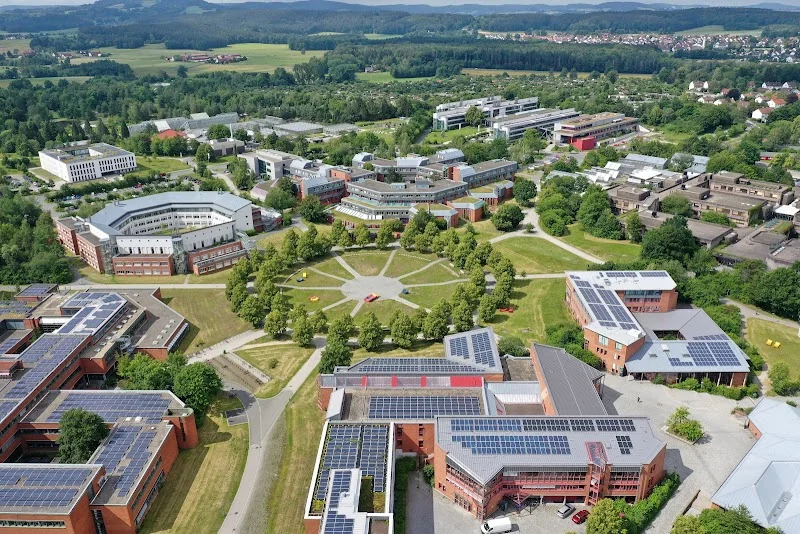
Universitätsstraße 30, Bayreuth
Universitätsstraße 30, 95447 Bayreuth, Germany
University of Bayreuth | Ranking & Master Programs in English
The University of Bayreuth is a relatively young, research-intensive university in northern Bavaria – founded in 1975 with a clear interdisciplinary mandate. Today, around 11,800 people from Germany and abroad study here, appreciating the compact, green campus, short distances, and the close integration of research and teaching. The Bayreuth location combines high quality of life with good accessibility; the campus is located at the southern city limits near the A9 (exit Bayreuth-South). Internationally, the university stands out with profile areas such as African Studies, Polymer and Materials Research, Climate and Environmental Sciences, Law and Economics, as well as newer focuses at its Kulmbach campus on Nutrition, Health, and Food Systems. For prospective students looking for English-language master's programs, reliable rankings, a transparent application portal, and practical career paths, this page offers a compact, fact-based overview – including information on address, travel, photos, email contacts, jobs, and PhD vacancies, as well as a research spotlight on hydrogels and the program Global Food, Nutrition and Health.
University of Bayreuth Ranking and QS Ranking 2026: Classification and Strengths
In the QS World University Rankings 2026, the University of Bayreuth is ranked 448th worldwide. This signals solid international visibility, particularly measured against indicators such as academic reputation, citations per faculty, internationality, and employability of graduates. At the same time, QS certifies that the university belongs to the top 20 percent in Europe. Those evaluating sustainability and societal impact will find the University of Bayreuth in a strong position in the QS Sustainability 2026: In the area of Health & Wellbeing, it ranks 116th worldwide. In the research-oriented Shanghai Rankings (ARWU) 2025, the university is in the range of 401–500 globally, thus counting among the high-performing research universities in Germany. Another indication of dynamism is its placement in the THE Young University Rankings 2024 (under 50 years): Rank 38 out of 673 institutions in the international comparison of young universities. These key figures illustrate that Bayreuth – despite its manageable size – competes internationally when it comes to excellent conditions for research and teaching. In addition to overall rankings, subject-specific strengths are visible, such as in materials and polymer sciences, environmental and life sciences, humanities and social sciences, or interdisciplinary fields like Philosophy & Economics. For prospective students, it is important to use rankings as one piece of information – alongside program quality, supervision ratios, location fit, and research profile. This is where Bayreuth excels: The campus is deliberately kept compact; the library, lecture halls, laboratories, sports facilities, and the Ecological-Botanical Garden are located close together. This creates time savings in everyday life and promotes exchange across disciplinary boundaries. Additionally, strong research networks and institutes enhance visibility and attract third-party funding, with a growing proportion of international students (about one-fifth in the winter semester 2025/26). Overall, a profile emerges that benefits both students and researchers: international connectivity, short distances, good supervision, and thematic focus on global future issues.
Master programs in English at the University of Bayreuth: Selection & Profiles
The search for 'university of bayreuth master programs in english' leads to several established programs that are convincing both in content and methodology and are aimed at international target groups. A flagship at the Kulmbach campus is the English-language master's program Global Food, Nutrition and Health (M.Sc.). It addresses the intersection of food systems, health, politics, and society – covering topics ranging from food security to public health to governance issues. The program implements interdisciplinary perspectives, linking natural, social, and legal scientific approaches and imparting skills for analysis, consulting, management, and policy-making in global food systems. Also in high demand is Computer Science (M.Sc.) in English, which combines modern areas of computer science with elective options. Here, depending on the focus, modules in Data Science, AI, Software Systems, or Theoretical Computer Science are possible; the faculties of natural sciences and engineering provide research-oriented teaching, laboratories, and good supervision ratios. Development Studies (M.A.) links social, economic, and regional scientific perspectives on development dynamics, poverty, governance, environment, and migration. The program prepares students for both analytical activities in research, think tanks, and international organizations, as well as practical tasks in NGOs, administration, or companies. Intercultural Anglophone Studies (M.A.) focuses on literature, culture, language, and transcultural dynamics in the Anglophone world. The program is suitable for careers in research, teaching, media, cultural management, or international institutions and benefits from Bayreuth's expertise in translation and cultural studies. In other fields, English master's programs are regularly selectable; examples include Global History (M.A.) with an international profile and clearly defined admission requirements or profiles from the life sciences (e.g., Biofabrication) and materials. The university consolidates all master's options in the program finder; there, program brochures with module lists, eligibility criteria, deadlines, and contacts can also be found. For applicants, it is important: All programs have specific admission requirements (e.g., minimum grade, subject-specific prior achievements, language level). Those who check early whether additional documents such as a VPD from uni-assist are required save time – especially when organizing visas or certified proofs. Additionally, Career Services, research institutes, and chairs provide insights into job fields and practical projects; the short distances on campus facilitate networking, for example, at Career Days or the Career Forum. This allows for a targeted integration of studies with internships, student jobs, or research work.
Application Portal (CAMPUSonline), Deadlines & Acceptance Rate explained
The central application runs through the Application Portal CAMPUSonline. The process is clearly structured: create an account, select desired study program, fill out forms, upload required documents, and submit on time. International applicants who obtained their degree outside the EU require a preliminary examination documentation (VPD) via uni-assist, depending on the program. Important is the timing: Processing a VPD can take six to eight weeks. Generally, the deadlines for master's applications are January 15 (summer semester) and July 15 (winter semester). Individual programs may set earlier or different deadlines (e.g., November 30 or June 1); the information on the respective program pages and regulations is decisive. Many programs allow applications even if the bachelor's degree is still pending – the certificate must then be submitted within a specified period. Prospective students should also carefully check admission criteria: Often required are a minimum final grade (e.g., 2.5 or 'good'), proof of subject-specific prior knowledge (core modules, ECTS), and language competencies (English C1 or specific to the program). For questions regarding documents, deadlines, and procedures, the master's office and international office are available. A frequently sought topic is 'acceptance rate'. German universities typically do not publish a general acceptance rate. Instead, admission is determined based on the respective program according to the eligibility criteria or – if capacities are limited – through a selection procedure with defined grade and point keys (NC). The NC is only determined at the end of the admission process and varies from year to year. For applicants, this means: It is worthwhile to submit one's documents as early and completely as possible, clearly justify program fit and motivation, and – where required – document additional qualifications (e.g., methods, language, or practical experience) neatly. Those who have parallel questions about visas, travel, housing, or insurance will find orientation in the university's welcome area as well as information on deadlines, Anabin classifications, and office hours of the teams. Additionally, the UBT-Campus app supports the organization of daily study life – from cafeteria plans to library access to grade overviews.
Address, Campus Map, Directions – and where to find official photos & email contacts
The official address of the University of Bayreuth is: Universitätsstraße 30, 95447 Bayreuth, Germany. The campus is located on the southern edge of the city; it is easily accessible by car via the A9 (exit Bayreuth-South). From there, the way to 'University' is signposted. Those arriving by train travel to Bayreuth Hbf and switch to local transport; campus stops connect the train station, city center, and university. For the Ecological-Botanical Garden, the stop is 'Universitätsverwaltung'. For orientation, the university provides current campus maps – as images, PDFs, and in variants with markings (e.g., libraries, childcare, accessible parking). This allows important facilities such as the central library and the decentralized subject libraries, lecture halls, laboratories, sports facilities, campus lake, and cafeteria to be found quickly. Those who want to explore the atmosphere digitally can use the virtual campus tour with impressions from study, research, and leisure. Collections of official press and campus photos are centrally managed; their use is subject to German copyright law and specific notes from the university (source citation 'Photo: University of Bayreuth'). For general inquiries, institutional email addresses exist under the domain 'uni-bayreuth.de' – for example, the International Office with a dedicated contact address for international students. Faculties, chairs, and service units each publish their own contact pages with visitor and postal addresses; typical information includes not only the university street but also building and room indications (e.g., NW II). Those exploring the campus on-site benefit from short distances: Most facilities are within a few minutes' walk of each other; this facilitates the transition between lectures, library, laboratory, and sports. Additionally, the campus app helps keep important information (news, events, meal plans, library account) mobile at a glance. For barrier-free navigation, the marked maps provide orientation, and designated parking spaces facilitate travel by car.
Jobs & PhD Vacancies: How to find positions at the University of Bayreuth
For the search for 'university of bayreuth jobs' or 'phd vacancies', two official points of contact are central. First, the university publishes professorships, research assistant, doctoral, and postdoc positions as well as positions in technology and administration on its 'Job Vacancies' page (mostly in German depending on the language, selected announcements in English). There, the respective valid application paths and contacts from the HR department can be found. Second, the Career Service operates the job portal or CareerPortal: a platform for internships, student jobs, entry-level positions, and career events. Companies and institutions from the region and beyond post targeted advertisements here; students can create profiles, set filters, and subscribe to notifications. Chairs and centers (e.g., in life and material sciences, computer science, law & economics) additionally publish specific PhD announcements on their institute pages – including structured doctoral positions in graduate schools and third-party funded projects. Recent examples include PhD announcements in Public/Planetary Health or food systems and project-related positions in Biofabrication, Data Science, or Sustainability. Those applying should have the usual documents in Germany ready: CV, certificates, possibly a publication list, cover letter, and – for academic positions – outlines of research interests. The university supports the transition to work with formats such as Career Days (summer semester) and Career Forum (winter semester), consulting services, workshops, and alumni networks. For student part-time jobs, there are also specific pages, such as in university sports. Employers reach suitable target groups through the university and can post positions in the job portal. For professorships, the university refers to transparent appointment procedures; the university holds a quality seal from the DHV for fair and reliable appointment negotiations. In short: Those looking for 'jobs' or 'phd vacancies' at the University of Bayreuth will find structured, current announcements through the official channels – supplemented by practical events and strong networking with regional and international partners.
Research in Focus: Hydrogels and Global Food, Nutrition and Health
A keyword that often comes up is 'hydrogel' – and indeed, Bayreuth is visible here. In 2025, the university reported a breakthrough: A team with Bayreuth involvement developed a self-healing hydrogel that combines strength, flexibility, and rapid self-repair. This was made possible by the use of particularly large, ultra-thin clay sheet nanosheets produced at the university and embedded in an ordered polymer network. The work was published in Nature Materials and opens perspectives for drug delivery, wound healing, soft robotics sensing, and artificial skin. Previously, Bayreuth had reported progress in biofabrication: A novel 3D printing technology combines hydrogels with fibers in a device, producing fibrous structures with uniaxial cell stretching and improving mechanical properties – published in Advanced Healthcare Materials. In breadth, university repositories reflect numerous hydrogel-related works – from 'smart', stimuli-responsive hydrogels to nanocomposite scaffolds to supramolecular systems. This research benefits from strong networks and infrastructures, such as in the field of polymer and materials sciences and the Bavarian Polymer Institute (joint initiative with universities in the region), as well as from modern laboratories and cross-sectional centers. At the same time, the Kulmbach campus shows why the master's program Global Food, Nutrition and Health is so well anchored in Bayreuth: Interdisciplinarity is the program's hallmark. The program links nutritional, health, social, legal, and economic sciences to address global challenges such as malnutrition, food security, sustainability, and health systems. Teaching and research teams work closely with external partners; media libraries and professor videos provide insights into projects, methodologies, and practical references. For students, this creates an attractive environment to connect research and application – whether in the laboratory (hydrogel materials, biofabrication, materials) or in policy and management-oriented fields (food systems, public health, governance). Career formats, practical projects, and the job portal bridge the gap to the labor market. And for those finally weighing their study decision, ranking signals (QS 2026, THE Young, Shanghai) connect with what makes Bayreuth strong in everyday life: a green campus offering short distances, international orientation, close supervision in teaching, and visible research focuses working on concrete future issues.
Sources:
- University of Bayreuth – QS World University Rankings 2026
- University of Bayreuth – Rankings Overview
- University of Bayreuth – QS Sustainability Ranking 2026 (Health & Wellbeing)
- University of Bayreuth – Shanghai Ranking 2025
- University of Bayreuth – University Profile (Numbers & THE Young)
- University of Bayreuth – In Numbers (Student Numbers 2024/25)
- University of Bayreuth – All Master's Programs
- University of Bayreuth – M.Sc. Global Food, Nutrition and Health
- Global Food, Nutrition and Health – Program Page
- University of Bayreuth – M.Sc. Computer Science
- University of Bayreuth – M.A. Development Studies
- University of Bayreuth – M.A. Intercultural Anglophone Studies
- University of Bayreuth – Application & Enrolment (NC Notes)
- International Office – Guidelines for International Degree Students (Deadlines)
- Student Office – Contact for International Applicants
- University of Bayreuth – Campus Map (including Parking and Accessibility Maps)
- Leiske Lab – Contact & Directions (A9 Bayreuth-South)
- Chair Axt – Contact (Address Universitätsstraße 30)
- University of Bayreuth – Job Vacancies
- Career Service – CareerPortal/Job Portal
- University of Bayreuth – Press: Self-Healing Hydrogel (Nature Materials)
- University of Bayreuth – Press: 3D Printing for Tissue (Advanced Healthcare Materials)
- University of Bayreuth – Virtual Campus Tour
- Wikimedia Commons – Logo University of Bayreuth
Show moreShow less
University of Bayreuth | Ranking & Master Programs in English
The University of Bayreuth is a relatively young, research-intensive university in northern Bavaria – founded in 1975 with a clear interdisciplinary mandate. Today, around 11,800 people from Germany and abroad study here, appreciating the compact, green campus, short distances, and the close integration of research and teaching. The Bayreuth location combines high quality of life with good accessibility; the campus is located at the southern city limits near the A9 (exit Bayreuth-South). Internationally, the university stands out with profile areas such as African Studies, Polymer and Materials Research, Climate and Environmental Sciences, Law and Economics, as well as newer focuses at its Kulmbach campus on Nutrition, Health, and Food Systems. For prospective students looking for English-language master's programs, reliable rankings, a transparent application portal, and practical career paths, this page offers a compact, fact-based overview – including information on address, travel, photos, email contacts, jobs, and PhD vacancies, as well as a research spotlight on hydrogels and the program Global Food, Nutrition and Health.
University of Bayreuth Ranking and QS Ranking 2026: Classification and Strengths
In the QS World University Rankings 2026, the University of Bayreuth is ranked 448th worldwide. This signals solid international visibility, particularly measured against indicators such as academic reputation, citations per faculty, internationality, and employability of graduates. At the same time, QS certifies that the university belongs to the top 20 percent in Europe. Those evaluating sustainability and societal impact will find the University of Bayreuth in a strong position in the QS Sustainability 2026: In the area of Health & Wellbeing, it ranks 116th worldwide. In the research-oriented Shanghai Rankings (ARWU) 2025, the university is in the range of 401–500 globally, thus counting among the high-performing research universities in Germany. Another indication of dynamism is its placement in the THE Young University Rankings 2024 (under 50 years): Rank 38 out of 673 institutions in the international comparison of young universities. These key figures illustrate that Bayreuth – despite its manageable size – competes internationally when it comes to excellent conditions for research and teaching. In addition to overall rankings, subject-specific strengths are visible, such as in materials and polymer sciences, environmental and life sciences, humanities and social sciences, or interdisciplinary fields like Philosophy & Economics. For prospective students, it is important to use rankings as one piece of information – alongside program quality, supervision ratios, location fit, and research profile. This is where Bayreuth excels: The campus is deliberately kept compact; the library, lecture halls, laboratories, sports facilities, and the Ecological-Botanical Garden are located close together. This creates time savings in everyday life and promotes exchange across disciplinary boundaries. Additionally, strong research networks and institutes enhance visibility and attract third-party funding, with a growing proportion of international students (about one-fifth in the winter semester 2025/26). Overall, a profile emerges that benefits both students and researchers: international connectivity, short distances, good supervision, and thematic focus on global future issues.
Master programs in English at the University of Bayreuth: Selection & Profiles
The search for 'university of bayreuth master programs in english' leads to several established programs that are convincing both in content and methodology and are aimed at international target groups. A flagship at the Kulmbach campus is the English-language master's program Global Food, Nutrition and Health (M.Sc.). It addresses the intersection of food systems, health, politics, and society – covering topics ranging from food security to public health to governance issues. The program implements interdisciplinary perspectives, linking natural, social, and legal scientific approaches and imparting skills for analysis, consulting, management, and policy-making in global food systems. Also in high demand is Computer Science (M.Sc.) in English, which combines modern areas of computer science with elective options. Here, depending on the focus, modules in Data Science, AI, Software Systems, or Theoretical Computer Science are possible; the faculties of natural sciences and engineering provide research-oriented teaching, laboratories, and good supervision ratios. Development Studies (M.A.) links social, economic, and regional scientific perspectives on development dynamics, poverty, governance, environment, and migration. The program prepares students for both analytical activities in research, think tanks, and international organizations, as well as practical tasks in NGOs, administration, or companies. Intercultural Anglophone Studies (M.A.) focuses on literature, culture, language, and transcultural dynamics in the Anglophone world. The program is suitable for careers in research, teaching, media, cultural management, or international institutions and benefits from Bayreuth's expertise in translation and cultural studies. In other fields, English master's programs are regularly selectable; examples include Global History (M.A.) with an international profile and clearly defined admission requirements or profiles from the life sciences (e.g., Biofabrication) and materials. The university consolidates all master's options in the program finder; there, program brochures with module lists, eligibility criteria, deadlines, and contacts can also be found. For applicants, it is important: All programs have specific admission requirements (e.g., minimum grade, subject-specific prior achievements, language level). Those who check early whether additional documents such as a VPD from uni-assist are required save time – especially when organizing visas or certified proofs. Additionally, Career Services, research institutes, and chairs provide insights into job fields and practical projects; the short distances on campus facilitate networking, for example, at Career Days or the Career Forum. This allows for a targeted integration of studies with internships, student jobs, or research work.
Application Portal (CAMPUSonline), Deadlines & Acceptance Rate explained
The central application runs through the Application Portal CAMPUSonline. The process is clearly structured: create an account, select desired study program, fill out forms, upload required documents, and submit on time. International applicants who obtained their degree outside the EU require a preliminary examination documentation (VPD) via uni-assist, depending on the program. Important is the timing: Processing a VPD can take six to eight weeks. Generally, the deadlines for master's applications are January 15 (summer semester) and July 15 (winter semester). Individual programs may set earlier or different deadlines (e.g., November 30 or June 1); the information on the respective program pages and regulations is decisive. Many programs allow applications even if the bachelor's degree is still pending – the certificate must then be submitted within a specified period. Prospective students should also carefully check admission criteria: Often required are a minimum final grade (e.g., 2.5 or 'good'), proof of subject-specific prior knowledge (core modules, ECTS), and language competencies (English C1 or specific to the program). For questions regarding documents, deadlines, and procedures, the master's office and international office are available. A frequently sought topic is 'acceptance rate'. German universities typically do not publish a general acceptance rate. Instead, admission is determined based on the respective program according to the eligibility criteria or – if capacities are limited – through a selection procedure with defined grade and point keys (NC). The NC is only determined at the end of the admission process and varies from year to year. For applicants, this means: It is worthwhile to submit one's documents as early and completely as possible, clearly justify program fit and motivation, and – where required – document additional qualifications (e.g., methods, language, or practical experience) neatly. Those who have parallel questions about visas, travel, housing, or insurance will find orientation in the university's welcome area as well as information on deadlines, Anabin classifications, and office hours of the teams. Additionally, the UBT-Campus app supports the organization of daily study life – from cafeteria plans to library access to grade overviews.
Address, Campus Map, Directions – and where to find official photos & email contacts
The official address of the University of Bayreuth is: Universitätsstraße 30, 95447 Bayreuth, Germany. The campus is located on the southern edge of the city; it is easily accessible by car via the A9 (exit Bayreuth-South). From there, the way to 'University' is signposted. Those arriving by train travel to Bayreuth Hbf and switch to local transport; campus stops connect the train station, city center, and university. For the Ecological-Botanical Garden, the stop is 'Universitätsverwaltung'. For orientation, the university provides current campus maps – as images, PDFs, and in variants with markings (e.g., libraries, childcare, accessible parking). This allows important facilities such as the central library and the decentralized subject libraries, lecture halls, laboratories, sports facilities, campus lake, and cafeteria to be found quickly. Those who want to explore the atmosphere digitally can use the virtual campus tour with impressions from study, research, and leisure. Collections of official press and campus photos are centrally managed; their use is subject to German copyright law and specific notes from the university (source citation 'Photo: University of Bayreuth'). For general inquiries, institutional email addresses exist under the domain 'uni-bayreuth.de' – for example, the International Office with a dedicated contact address for international students. Faculties, chairs, and service units each publish their own contact pages with visitor and postal addresses; typical information includes not only the university street but also building and room indications (e.g., NW II). Those exploring the campus on-site benefit from short distances: Most facilities are within a few minutes' walk of each other; this facilitates the transition between lectures, library, laboratory, and sports. Additionally, the campus app helps keep important information (news, events, meal plans, library account) mobile at a glance. For barrier-free navigation, the marked maps provide orientation, and designated parking spaces facilitate travel by car.
Jobs & PhD Vacancies: How to find positions at the University of Bayreuth
For the search for 'university of bayreuth jobs' or 'phd vacancies', two official points of contact are central. First, the university publishes professorships, research assistant, doctoral, and postdoc positions as well as positions in technology and administration on its 'Job Vacancies' page (mostly in German depending on the language, selected announcements in English). There, the respective valid application paths and contacts from the HR department can be found. Second, the Career Service operates the job portal or CareerPortal: a platform for internships, student jobs, entry-level positions, and career events. Companies and institutions from the region and beyond post targeted advertisements here; students can create profiles, set filters, and subscribe to notifications. Chairs and centers (e.g., in life and material sciences, computer science, law & economics) additionally publish specific PhD announcements on their institute pages – including structured doctoral positions in graduate schools and third-party funded projects. Recent examples include PhD announcements in Public/Planetary Health or food systems and project-related positions in Biofabrication, Data Science, or Sustainability. Those applying should have the usual documents in Germany ready: CV, certificates, possibly a publication list, cover letter, and – for academic positions – outlines of research interests. The university supports the transition to work with formats such as Career Days (summer semester) and Career Forum (winter semester), consulting services, workshops, and alumni networks. For student part-time jobs, there are also specific pages, such as in university sports. Employers reach suitable target groups through the university and can post positions in the job portal. For professorships, the university refers to transparent appointment procedures; the university holds a quality seal from the DHV for fair and reliable appointment negotiations. In short: Those looking for 'jobs' or 'phd vacancies' at the University of Bayreuth will find structured, current announcements through the official channels – supplemented by practical events and strong networking with regional and international partners.
Research in Focus: Hydrogels and Global Food, Nutrition and Health
A keyword that often comes up is 'hydrogel' – and indeed, Bayreuth is visible here. In 2025, the university reported a breakthrough: A team with Bayreuth involvement developed a self-healing hydrogel that combines strength, flexibility, and rapid self-repair. This was made possible by the use of particularly large, ultra-thin clay sheet nanosheets produced at the university and embedded in an ordered polymer network. The work was published in Nature Materials and opens perspectives for drug delivery, wound healing, soft robotics sensing, and artificial skin. Previously, Bayreuth had reported progress in biofabrication: A novel 3D printing technology combines hydrogels with fibers in a device, producing fibrous structures with uniaxial cell stretching and improving mechanical properties – published in Advanced Healthcare Materials. In breadth, university repositories reflect numerous hydrogel-related works – from 'smart', stimuli-responsive hydrogels to nanocomposite scaffolds to supramolecular systems. This research benefits from strong networks and infrastructures, such as in the field of polymer and materials sciences and the Bavarian Polymer Institute (joint initiative with universities in the region), as well as from modern laboratories and cross-sectional centers. At the same time, the Kulmbach campus shows why the master's program Global Food, Nutrition and Health is so well anchored in Bayreuth: Interdisciplinarity is the program's hallmark. The program links nutritional, health, social, legal, and economic sciences to address global challenges such as malnutrition, food security, sustainability, and health systems. Teaching and research teams work closely with external partners; media libraries and professor videos provide insights into projects, methodologies, and practical references. For students, this creates an attractive environment to connect research and application – whether in the laboratory (hydrogel materials, biofabrication, materials) or in policy and management-oriented fields (food systems, public health, governance). Career formats, practical projects, and the job portal bridge the gap to the labor market. And for those finally weighing their study decision, ranking signals (QS 2026, THE Young, Shanghai) connect with what makes Bayreuth strong in everyday life: a green campus offering short distances, international orientation, close supervision in teaching, and visible research focuses working on concrete future issues.
Sources:
- University of Bayreuth – QS World University Rankings 2026
- University of Bayreuth – Rankings Overview
- University of Bayreuth – QS Sustainability Ranking 2026 (Health & Wellbeing)
- University of Bayreuth – Shanghai Ranking 2025
- University of Bayreuth – University Profile (Numbers & THE Young)
- University of Bayreuth – In Numbers (Student Numbers 2024/25)
- University of Bayreuth – All Master's Programs
- University of Bayreuth – M.Sc. Global Food, Nutrition and Health
- Global Food, Nutrition and Health – Program Page
- University of Bayreuth – M.Sc. Computer Science
- University of Bayreuth – M.A. Development Studies
- University of Bayreuth – M.A. Intercultural Anglophone Studies
- University of Bayreuth – Application & Enrolment (NC Notes)
- International Office – Guidelines for International Degree Students (Deadlines)
- Student Office – Contact for International Applicants
- University of Bayreuth – Campus Map (including Parking and Accessibility Maps)
- Leiske Lab – Contact & Directions (A9 Bayreuth-South)
- Chair Axt – Contact (Address Universitätsstraße 30)
- University of Bayreuth – Job Vacancies
- Career Service – CareerPortal/Job Portal
- University of Bayreuth – Press: Self-Healing Hydrogel (Nature Materials)
- University of Bayreuth – Press: 3D Printing for Tissue (Advanced Healthcare Materials)
- University of Bayreuth – Virtual Campus Tour
- Wikimedia Commons – Logo University of Bayreuth
University of Bayreuth | Ranking & Master Programs in English
The University of Bayreuth is a relatively young, research-intensive university in northern Bavaria – founded in 1975 with a clear interdisciplinary mandate. Today, around 11,800 people from Germany and abroad study here, appreciating the compact, green campus, short distances, and the close integration of research and teaching. The Bayreuth location combines high quality of life with good accessibility; the campus is located at the southern city limits near the A9 (exit Bayreuth-South). Internationally, the university stands out with profile areas such as African Studies, Polymer and Materials Research, Climate and Environmental Sciences, Law and Economics, as well as newer focuses at its Kulmbach campus on Nutrition, Health, and Food Systems. For prospective students looking for English-language master's programs, reliable rankings, a transparent application portal, and practical career paths, this page offers a compact, fact-based overview – including information on address, travel, photos, email contacts, jobs, and PhD vacancies, as well as a research spotlight on hydrogels and the program Global Food, Nutrition and Health.
University of Bayreuth Ranking and QS Ranking 2026: Classification and Strengths
In the QS World University Rankings 2026, the University of Bayreuth is ranked 448th worldwide. This signals solid international visibility, particularly measured against indicators such as academic reputation, citations per faculty, internationality, and employability of graduates. At the same time, QS certifies that the university belongs to the top 20 percent in Europe. Those evaluating sustainability and societal impact will find the University of Bayreuth in a strong position in the QS Sustainability 2026: In the area of Health & Wellbeing, it ranks 116th worldwide. In the research-oriented Shanghai Rankings (ARWU) 2025, the university is in the range of 401–500 globally, thus counting among the high-performing research universities in Germany. Another indication of dynamism is its placement in the THE Young University Rankings 2024 (under 50 years): Rank 38 out of 673 institutions in the international comparison of young universities. These key figures illustrate that Bayreuth – despite its manageable size – competes internationally when it comes to excellent conditions for research and teaching. In addition to overall rankings, subject-specific strengths are visible, such as in materials and polymer sciences, environmental and life sciences, humanities and social sciences, or interdisciplinary fields like Philosophy & Economics. For prospective students, it is important to use rankings as one piece of information – alongside program quality, supervision ratios, location fit, and research profile. This is where Bayreuth excels: The campus is deliberately kept compact; the library, lecture halls, laboratories, sports facilities, and the Ecological-Botanical Garden are located close together. This creates time savings in everyday life and promotes exchange across disciplinary boundaries. Additionally, strong research networks and institutes enhance visibility and attract third-party funding, with a growing proportion of international students (about one-fifth in the winter semester 2025/26). Overall, a profile emerges that benefits both students and researchers: international connectivity, short distances, good supervision, and thematic focus on global future issues.
Master programs in English at the University of Bayreuth: Selection & Profiles
The search for 'university of bayreuth master programs in english' leads to several established programs that are convincing both in content and methodology and are aimed at international target groups. A flagship at the Kulmbach campus is the English-language master's program Global Food, Nutrition and Health (M.Sc.). It addresses the intersection of food systems, health, politics, and society – covering topics ranging from food security to public health to governance issues. The program implements interdisciplinary perspectives, linking natural, social, and legal scientific approaches and imparting skills for analysis, consulting, management, and policy-making in global food systems. Also in high demand is Computer Science (M.Sc.) in English, which combines modern areas of computer science with elective options. Here, depending on the focus, modules in Data Science, AI, Software Systems, or Theoretical Computer Science are possible; the faculties of natural sciences and engineering provide research-oriented teaching, laboratories, and good supervision ratios. Development Studies (M.A.) links social, economic, and regional scientific perspectives on development dynamics, poverty, governance, environment, and migration. The program prepares students for both analytical activities in research, think tanks, and international organizations, as well as practical tasks in NGOs, administration, or companies. Intercultural Anglophone Studies (M.A.) focuses on literature, culture, language, and transcultural dynamics in the Anglophone world. The program is suitable for careers in research, teaching, media, cultural management, or international institutions and benefits from Bayreuth's expertise in translation and cultural studies. In other fields, English master's programs are regularly selectable; examples include Global History (M.A.) with an international profile and clearly defined admission requirements or profiles from the life sciences (e.g., Biofabrication) and materials. The university consolidates all master's options in the program finder; there, program brochures with module lists, eligibility criteria, deadlines, and contacts can also be found. For applicants, it is important: All programs have specific admission requirements (e.g., minimum grade, subject-specific prior achievements, language level). Those who check early whether additional documents such as a VPD from uni-assist are required save time – especially when organizing visas or certified proofs. Additionally, Career Services, research institutes, and chairs provide insights into job fields and practical projects; the short distances on campus facilitate networking, for example, at Career Days or the Career Forum. This allows for a targeted integration of studies with internships, student jobs, or research work.
Application Portal (CAMPUSonline), Deadlines & Acceptance Rate explained
The central application runs through the Application Portal CAMPUSonline. The process is clearly structured: create an account, select desired study program, fill out forms, upload required documents, and submit on time. International applicants who obtained their degree outside the EU require a preliminary examination documentation (VPD) via uni-assist, depending on the program. Important is the timing: Processing a VPD can take six to eight weeks. Generally, the deadlines for master's applications are January 15 (summer semester) and July 15 (winter semester). Individual programs may set earlier or different deadlines (e.g., November 30 or June 1); the information on the respective program pages and regulations is decisive. Many programs allow applications even if the bachelor's degree is still pending – the certificate must then be submitted within a specified period. Prospective students should also carefully check admission criteria: Often required are a minimum final grade (e.g., 2.5 or 'good'), proof of subject-specific prior knowledge (core modules, ECTS), and language competencies (English C1 or specific to the program). For questions regarding documents, deadlines, and procedures, the master's office and international office are available. A frequently sought topic is 'acceptance rate'. German universities typically do not publish a general acceptance rate. Instead, admission is determined based on the respective program according to the eligibility criteria or – if capacities are limited – through a selection procedure with defined grade and point keys (NC). The NC is only determined at the end of the admission process and varies from year to year. For applicants, this means: It is worthwhile to submit one's documents as early and completely as possible, clearly justify program fit and motivation, and – where required – document additional qualifications (e.g., methods, language, or practical experience) neatly. Those who have parallel questions about visas, travel, housing, or insurance will find orientation in the university's welcome area as well as information on deadlines, Anabin classifications, and office hours of the teams. Additionally, the UBT-Campus app supports the organization of daily study life – from cafeteria plans to library access to grade overviews.
Address, Campus Map, Directions – and where to find official photos & email contacts
The official address of the University of Bayreuth is: Universitätsstraße 30, 95447 Bayreuth, Germany. The campus is located on the southern edge of the city; it is easily accessible by car via the A9 (exit Bayreuth-South). From there, the way to 'University' is signposted. Those arriving by train travel to Bayreuth Hbf and switch to local transport; campus stops connect the train station, city center, and university. For the Ecological-Botanical Garden, the stop is 'Universitätsverwaltung'. For orientation, the university provides current campus maps – as images, PDFs, and in variants with markings (e.g., libraries, childcare, accessible parking). This allows important facilities such as the central library and the decentralized subject libraries, lecture halls, laboratories, sports facilities, campus lake, and cafeteria to be found quickly. Those who want to explore the atmosphere digitally can use the virtual campus tour with impressions from study, research, and leisure. Collections of official press and campus photos are centrally managed; their use is subject to German copyright law and specific notes from the university (source citation 'Photo: University of Bayreuth'). For general inquiries, institutional email addresses exist under the domain 'uni-bayreuth.de' – for example, the International Office with a dedicated contact address for international students. Faculties, chairs, and service units each publish their own contact pages with visitor and postal addresses; typical information includes not only the university street but also building and room indications (e.g., NW II). Those exploring the campus on-site benefit from short distances: Most facilities are within a few minutes' walk of each other; this facilitates the transition between lectures, library, laboratory, and sports. Additionally, the campus app helps keep important information (news, events, meal plans, library account) mobile at a glance. For barrier-free navigation, the marked maps provide orientation, and designated parking spaces facilitate travel by car.
Jobs & PhD Vacancies: How to find positions at the University of Bayreuth
For the search for 'university of bayreuth jobs' or 'phd vacancies', two official points of contact are central. First, the university publishes professorships, research assistant, doctoral, and postdoc positions as well as positions in technology and administration on its 'Job Vacancies' page (mostly in German depending on the language, selected announcements in English). There, the respective valid application paths and contacts from the HR department can be found. Second, the Career Service operates the job portal or CareerPortal: a platform for internships, student jobs, entry-level positions, and career events. Companies and institutions from the region and beyond post targeted advertisements here; students can create profiles, set filters, and subscribe to notifications. Chairs and centers (e.g., in life and material sciences, computer science, law & economics) additionally publish specific PhD announcements on their institute pages – including structured doctoral positions in graduate schools and third-party funded projects. Recent examples include PhD announcements in Public/Planetary Health or food systems and project-related positions in Biofabrication, Data Science, or Sustainability. Those applying should have the usual documents in Germany ready: CV, certificates, possibly a publication list, cover letter, and – for academic positions – outlines of research interests. The university supports the transition to work with formats such as Career Days (summer semester) and Career Forum (winter semester), consulting services, workshops, and alumni networks. For student part-time jobs, there are also specific pages, such as in university sports. Employers reach suitable target groups through the university and can post positions in the job portal. For professorships, the university refers to transparent appointment procedures; the university holds a quality seal from the DHV for fair and reliable appointment negotiations. In short: Those looking for 'jobs' or 'phd vacancies' at the University of Bayreuth will find structured, current announcements through the official channels – supplemented by practical events and strong networking with regional and international partners.
Research in Focus: Hydrogels and Global Food, Nutrition and Health
A keyword that often comes up is 'hydrogel' – and indeed, Bayreuth is visible here. In 2025, the university reported a breakthrough: A team with Bayreuth involvement developed a self-healing hydrogel that combines strength, flexibility, and rapid self-repair. This was made possible by the use of particularly large, ultra-thin clay sheet nanosheets produced at the university and embedded in an ordered polymer network. The work was published in Nature Materials and opens perspectives for drug delivery, wound healing, soft robotics sensing, and artificial skin. Previously, Bayreuth had reported progress in biofabrication: A novel 3D printing technology combines hydrogels with fibers in a device, producing fibrous structures with uniaxial cell stretching and improving mechanical properties – published in Advanced Healthcare Materials. In breadth, university repositories reflect numerous hydrogel-related works – from 'smart', stimuli-responsive hydrogels to nanocomposite scaffolds to supramolecular systems. This research benefits from strong networks and infrastructures, such as in the field of polymer and materials sciences and the Bavarian Polymer Institute (joint initiative with universities in the region), as well as from modern laboratories and cross-sectional centers. At the same time, the Kulmbach campus shows why the master's program Global Food, Nutrition and Health is so well anchored in Bayreuth: Interdisciplinarity is the program's hallmark. The program links nutritional, health, social, legal, and economic sciences to address global challenges such as malnutrition, food security, sustainability, and health systems. Teaching and research teams work closely with external partners; media libraries and professor videos provide insights into projects, methodologies, and practical references. For students, this creates an attractive environment to connect research and application – whether in the laboratory (hydrogel materials, biofabrication, materials) or in policy and management-oriented fields (food systems, public health, governance). Career formats, practical projects, and the job portal bridge the gap to the labor market. And for those finally weighing their study decision, ranking signals (QS 2026, THE Young, Shanghai) connect with what makes Bayreuth strong in everyday life: a green campus offering short distances, international orientation, close supervision in teaching, and visible research focuses working on concrete future issues.
Sources:
- University of Bayreuth – QS World University Rankings 2026
- University of Bayreuth – Rankings Overview
- University of Bayreuth – QS Sustainability Ranking 2026 (Health & Wellbeing)
- University of Bayreuth – Shanghai Ranking 2025
- University of Bayreuth – University Profile (Numbers & THE Young)
- University of Bayreuth – In Numbers (Student Numbers 2024/25)
- University of Bayreuth – All Master's Programs
- University of Bayreuth – M.Sc. Global Food, Nutrition and Health
- Global Food, Nutrition and Health – Program Page
- University of Bayreuth – M.Sc. Computer Science
- University of Bayreuth – M.A. Development Studies
- University of Bayreuth – M.A. Intercultural Anglophone Studies
- University of Bayreuth – Application & Enrolment (NC Notes)
- International Office – Guidelines for International Degree Students (Deadlines)
- Student Office – Contact for International Applicants
- University of Bayreuth – Campus Map (including Parking and Accessibility Maps)
- Leiske Lab – Contact & Directions (A9 Bayreuth-South)
- Chair Axt – Contact (Address Universitätsstraße 30)
- University of Bayreuth – Job Vacancies
- Career Service – CareerPortal/Job Portal
- University of Bayreuth – Press: Self-Healing Hydrogel (Nature Materials)
- University of Bayreuth – Press: 3D Printing for Tissue (Advanced Healthcare Materials)
- University of Bayreuth – Virtual Campus Tour
- Wikimedia Commons – Logo University of Bayreuth
Frequently Asked Questions
Reviews
Adam Baluchh
30. April 2025
As a final-year student of BSc Microbiology, I am highly motivated to pursue my Master’s degree at the University of Bayreuth due to its interdisciplinary focus on food quality, safety, and microbiological research. The program’s emphasis on modern analytical techniques, food hygiene, and the microbial aspects of food systems aligns closely with both my academic background and long-term career goals. What particularly draws me to Bayreuth is its strong commitment to combining theoretical knowledge with practical applications in real-world food safety contexts. Additionally, the university’s beautiful, research-driven environment and international orientation make it an ideal place for both personal and academic growth. I am eager to contribute to and learn from the diverse scientific community at Bayreuth while deepening my expertise in microbiology’s role in food safety and public health.
Toprak Dikici
23. October 2024
So far the philosophy and computer science courses rock! Lecturers are extremely helpful, it's a great place to make brilliant friends. Campus is amazing, food is really good. City has great infrastructure compared to its size and population, you can enjoy the nature here. I feel very lucky to be here 🙌🏻. Only problem is accommodation.
Sadia Afrin
28. October 2024
One of my favorite universities. The environment of the university looks very beautiful😍. I want to do masters in this university of my choice in future. Currently I am doing graduation in Zoology from National University. Can I choose any science subject later for Masters?
Ahmet Atasoy
8. September 2025
I want to study in English and I've been to the Data, Science and AI department. Where can I find more information?
Alireza Abdi
5. October 2023
For Germans: This place is fine; it meets expectations in education and lifestyle. 🌐 For Exchange Students: It's manageable for a short-term stay; you're less likely to encounter major issues. 🌍 For Long-Term International Students: Be cautious. Expect poor quality of education, regulations, financial struggles, job market after graduation, especially in programs like Computer Science or Economics take 3-4 years. C1 level German is a must to lessen the difficulties. In general, the chance is "low". ⚠️ General Note: I'm personally unsatisfied with my experience here. Issues range from educational quality to language barriers, etc. Even those from wealthy backgrounds may face opportunity costs, except in niche fields like African Studies, culture... 🌳 Nature: The only bright spot in an otherwise challenging environment. 🔴 Overall: Mainly suitable for Germans; not recommended for long-term international students. Exercise caution, especially if self-funded. Good luck.