
Inclusion and Football at Ossecker Stadium
Inclusive Bambini Tournament Excites 110 Children at Ossecker Stadium
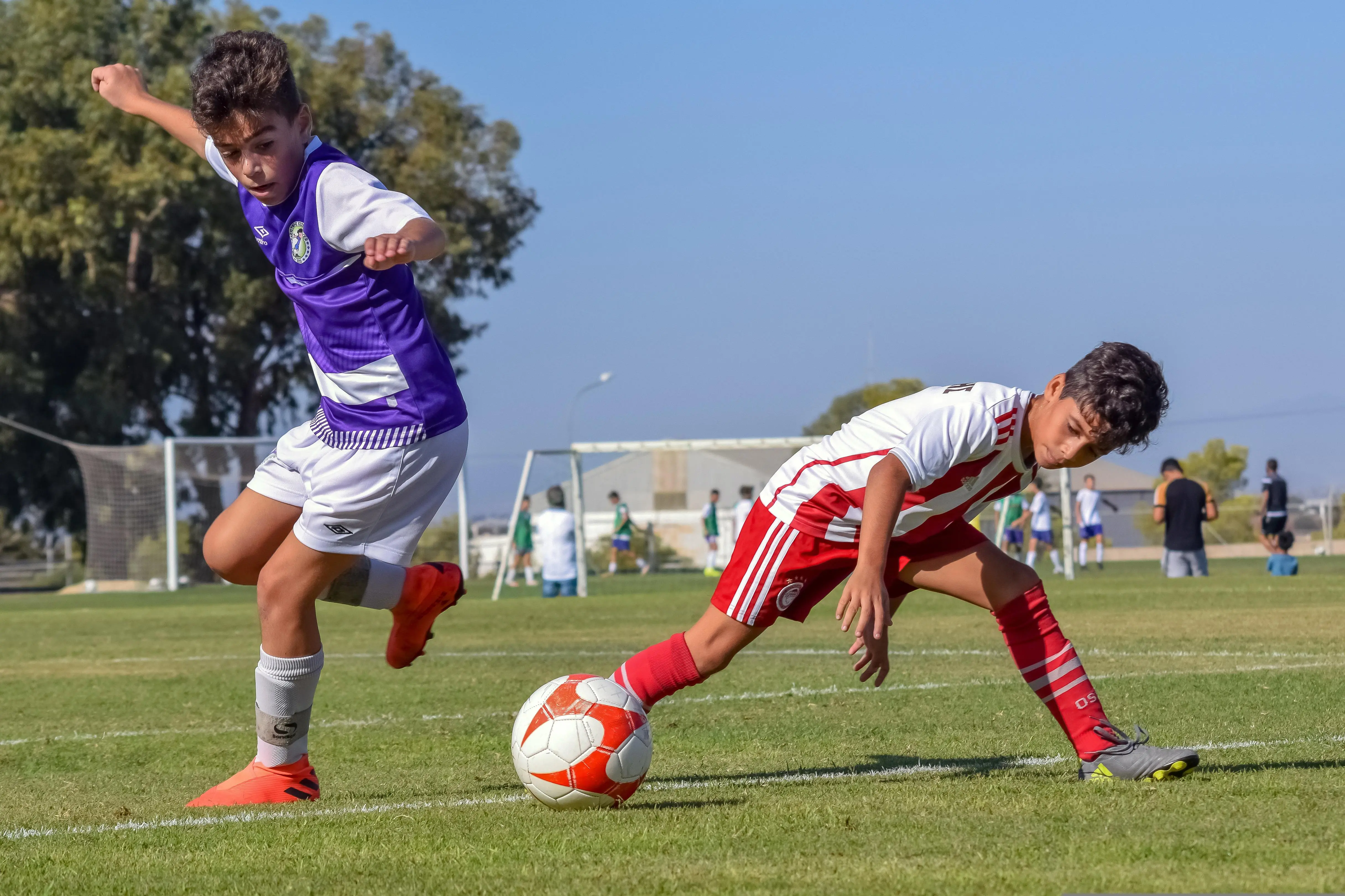
At Ossecker Stadium this Tuesday, the focus is not only on athletic competition, but above all on playing together. Around 110 children from Hof and the region are taking part in an inclusive Bambini tournament that consciously brings together competition and participation.
The organizers are the City of Hof, Lebenshilfe Hof, and Special Olympics Bavaria. On the field, third and fourth grade students from Hof elementary schools as well as fourth and fifth grade students from special schools in the city and district meet each other—in mixed teams and with the common goal of making football as a team sport accessible to everyone.
Many Teams, Clear Structure, Shared Football Day
The games are played on three fields. Each team consists of five field players and a goalkeeper, with each game lasting eight minutes. At the start, Jörg Herzig, head of the Lindenbühl School, and Burkhard Baier, responsible for schools, youth, social affairs, and sports, welcome the participants. The tournament then begins.
The organizational preparation is handled by the sports office of the City of Hof and Lebenshilfe. The fact that the tournament works with clear procedures and reliable rules is more than just a formality: especially with a field of participants with different backgrounds, a clear structure provides orientation—and ensures that all children can play under comparable conditions.
At the award ceremony, Mayor Sebastian Auer sums up the aim of the event: “This tournament shows how inclusion can succeed.” Together with Max Kühnreich, he presents the awards to the teams.
Swiss System: Fair Process Despite Many Teams
The tournament is played according to the Swiss system. The pairings are based on previous results—teams with similar records are more likely to play each other as the tournament progresses. For a format with many teams and a limited number of rounds, this is a practical way to keep games as balanced as possible without every team having to play every other team.
In total, five rounds are scheduled, followed by the finals. This keeps the tournament structure clear, while also allowing for a sports-based division into performance groups.
Five young referees ensure smooth operations and sporting fairness: Lukas Hartmann and Lars Opel from Schiller-Gymnasium as well as Janis Steppan, Patrik Karicka, and John Fraaß from the vocational school level at Lindenbühl School. Ten other students from Schiller-Gymnasium support the organization and catering as part of a P-seminar—a contribution that also highlights the football day as a community project.
Winners in Three Performance Groups—and a Signal Beyond
The results are evaluated in three performance groups. In performance group I, Team Sophienschule prevails. Performance group II is won by Team Bonhoefferschule. In performance group III, Team Moschendorf 2 takes first place.
But the solid core of this day is not just about rankings. The tournament combines fixed rules, cross-school cooperation, and sporting ambition with an inclusive approach that practically organizes participation—on the field, on the sidelines, and in the shared responsibility of many involved.
The fact that the event is embedded in a network established as part of the “Host Town” project around the Special Olympics World Games 2023 gives the football day additional weight: Inclusion here is not seen as a one-off event, but as a structure that should grow and remain.