
Inclusion and Football at Ossecker Stadium
Inclusive Bambini Tournament Excites 110 Children at Ossecker Stadium
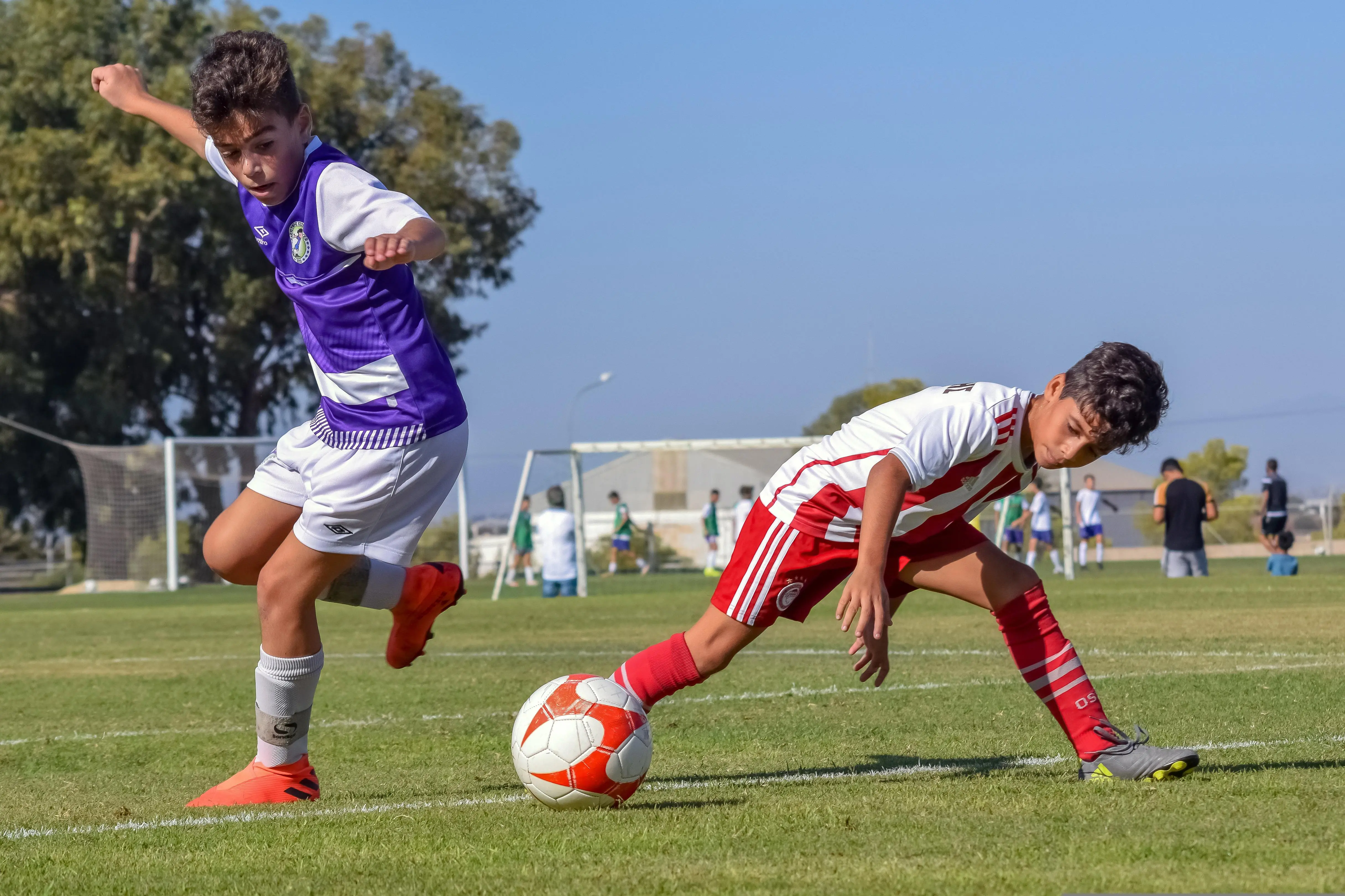
At Ossecker Stadium, the focus this time was not only on athletic competition, but above all on playing together. Around 110 children from Hof and the region took part in an inclusive Bambini tournament, playing five rounds and subsequent finals – in a setting designed to make participation visible while still allowing for real moments of competition.
The football day was organized by the City of Hof in cooperation with Lebenshilfe Hof and Special Olympics Bavaria. Games were played simultaneously on three fields according to the Swiss system, before the strongest teams were determined in three performance classes.
The Inclusive Approach Shapes the Football Day
The concept of the tournament included children from different types of schools playing together on the field – regardless of individual prerequisites. The participants consisted of third and fourth graders from Hof's primary schools as well as fourth and fifth graders from special schools in the city and district. This mix is the core of the idea: encounters do not happen on the sidelines, but in the game itself, where roles, responsibility, and teamwork apply equally to everyone.
At the award ceremony, Mayor Sebastian Auer emphasized the character of the event: “This tournament shows how inclusion can succeed.” He presented the awards together with Max Kühnreich. In terms of content, the tournament fits into a larger context: it is part of a sustainable network established as part of the “Host Town” project around the Special Olympics World Games 2023. The football day thus builds on structures that enable not only one-off actions, but reliable cooperation between the city, schools, and partners in disability support.
At the start, Jörg Herzig, head of the Lindenbühl School, and Burkhard Baier, responsible for schools, youth, social affairs, and sports, welcomed the participating children and accompanying persons. Afterwards, it became clear on the field what inclusion in sports means in practice: rules and procedures are designed so that as many children as possible can participate, barriers in interaction are reduced, and the shared experience is the focus – without ignoring sporting ambition.
Three Fields, Five Rounds, Clear Tournament Structure
Games were played on three fields. Each team consisted of five field players and a goalkeeper, with each game lasting eight minutes. In total, five rounds and subsequent finals were on the program.
The tournament format used was the Swiss system: pairings in each round are based on previous results. This increases the chance of balanced matches, as teams are more likely to face opponents of similar strength throughout the day. For a children's tournament with many participants, this is also a practical way to guarantee playing time while still providing a comprehensible sporting competition.
Five young referees ensured fairness and smooth proceedings: Lukas Hartmann and Lars Opel from Schiller-Gymnasium, as well as Janis Steppan, Patrik Karicka, and John Fraaß from the vocational level at Lindenbühl School. Ten other students from Schiller-Gymnasium supported catering and organization as part of a P-seminar – a contribution that also supported the event behind the scenes.
These Teams Prevail in the Performance Groups
- Performance Group I: Team Sophienschule
- Performance Group II: Team Bonhoefferschule
- Performance Group III: Team Moschendorf 2
The results gave the tournament a sporting conclusion. However, the lasting significance lay in the framework set by the organizers: children from different schools played together, the tournament structure ensured many encounters at eye level, and the network of city, Lebenshilfe, and Special Olympics Bavaria showed how participation in sports can be concretely organized. Thus, a football day was created at Ossecker Stadium where victories were allowed to count – but the tone was set by community, fairness, and lived inclusion.